

How Often Should You Get a Gel Manicure Without Damaging Your Nails?
Gel manicures can look great, but for some people, nails may start peeling or thinning after repeated applications. The right frequency between appointments can vary depending on your nails, the products used, and how they’re applied and removed. Getting gels too close together, without breaks, may increase the risk of brittleness or damage for some people. What works best for your nails is worth paying attention to over time.
Key Takeaways
- Most nail experts recommend waiting two to three weeks between gel manicures to manage natural nail growth and minimize damage.
- Scheduling fills every three to four weeks reduces acetone exposure and allows nails to recover between appointments.
- Signs like thinning, peeling, or unusual flexibility indicate nails need a complete break before the next gel application.
- Poor removal techniques cause most nail damage; always use foil wraps and avoid picking or peeling gel off.
- Taking several weeks completely bare, moisturized, and undisturbed helps nails recover from cumulative gel manicure stress.
How Often Should You Really Get a Gel Manicure?
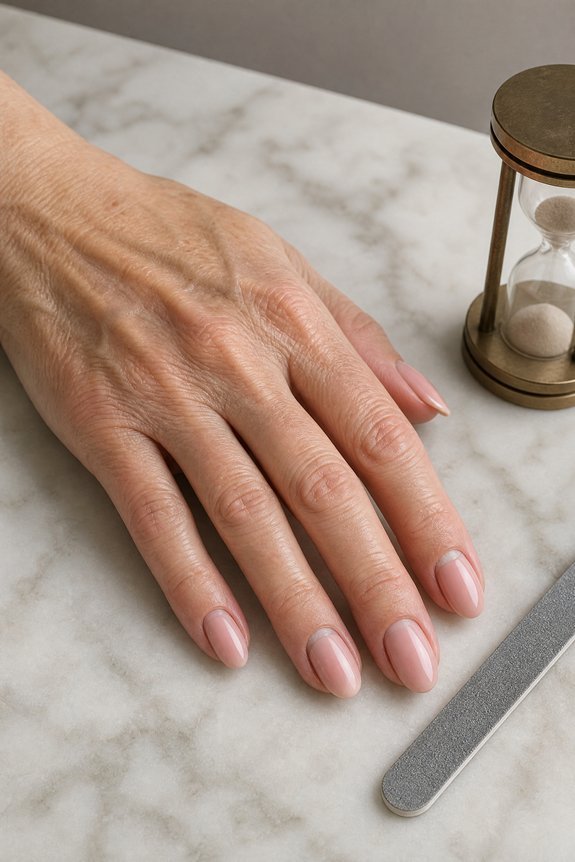
There’s no universal rule for how often you should get a gel manicure, and that can feel frustrating when you’re just trying to keep your nails healthy without wrecking them.
A common guideline is waiting at least three to four weeks between fills, though this can vary depending on your nail health, the salon’s technique, and how your nails typically grow or react to gel products.
Seasonal timing can matter, too. Some people notice their nails feel drier in winter or softer from summer humidity, so adjusting your schedule based on how your nails are actually doing makes sense.
Going from one gel set straight into another, without any breaks, tends to leave nails thinner and more brittle over time.
Giving your nails some recovery time — say, switching to regular polish or going bare for a stretch — can help, though how quickly nails bounce back varies from person to person.
Gel can be a nice option when you want polish that lasts, but it doesn’t have to be constant. Applying a topcoat refresh every few days can also help extend the wear of your gel manicure while keeping nails looking polished.
Paying attention to how your own nails respond is the best way to figure out what works for you. Most nail experts recommend getting a gel manicure every 2 to 3 weeks, as this timeline aligns with the natural growth rate of nails and helps prevent peeling and lifting.
The 2–3 Week Gel Schedule That Keeps Nails Healthy
Most of us land on a gel schedule through trial and error — a set that lifts too soon, or one we left on two weeks too long and had to pick apart at the sink. For many people, 2–3 weeks tends to be the sweet spot, though the right timing can depend on how fast your nails grow and which products your salon uses.
Here’s the general thinking behind it:
- Nail growth stays manageable in this window, so the gel usually stays closer to the cuticle without an obvious gap.
- Regular timing can help catch lifting or wear before it turns into a bigger chip or crack.
- Spacing appointments out may reduce how often your nails are exposed to acetone soaks, which can be drying for some people. Wearing gloves made from breathable fibers such as merino wool while washing dishes or gardening can further protect nails from repeated moisture exposure between appointments.
- A fresh shape at each visit makes it easier to smooth out small chips before they spread.
If this window works for your nails, sticking with it can help you stay ahead of damage — but pay attention to how your own nails respond, since everyone’s timeline looks a little different. Dermatologists generally recommend limiting gel manicures to a few special occasions per year rather than every 2–3 weeks to give nails adequate recovery time.
Do Your Nails Actually Need a Break From Gel?
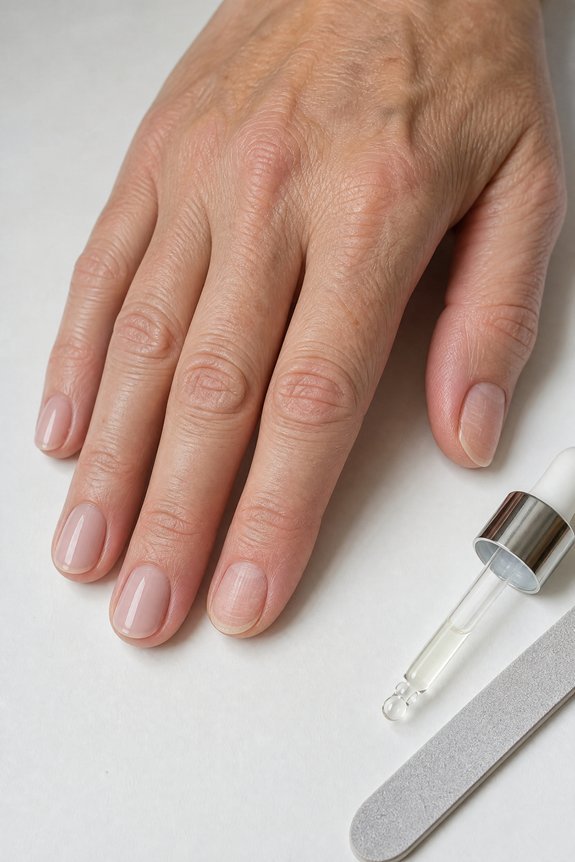
If you’ve ever heard that your nails need to “breathe” between gel sets, you’ve run into one of the more persistent myths in nail care.
Your nails are made of dead keratin cells, so air exposure doesn’t change anything for them. The nail bed gets its nourishment from your bloodstream, not from time spent without polish.
That doesn’t mean breaks are pointless, they’re just not about biology. If your nails feel thin, are peeling, or seem unusually flexible, that’s a sign to pause. Taking a week or two off can let damaged layers grow out and give strengthening treatments a chance to work.
Think of a break as basic upkeep rather than a fix-all. If your nails are healthy and you’re using proper application and gentle removal, you may not need breaks very often at all. How your nails respond can vary from person to person, so pay attention to what your own nails are telling you. In fact, it’s poor removal techniques rather than the polish itself that most commonly cause nail damage in the first place.
The Real Risks of Getting Gel Manicures Too Often
Gel manicures do come with some real risks, and getting them often can make those risks add up over time. This isn’t meant to scare you off gel polish—it’s just useful to know what’s happening under that shiny topcoat so you can make choices that work for you.
Here are four things worth knowing:
1. Skin sensitivity – The chemicals in gel polish (called monomers) can sometimes trigger an allergic reaction on the skin around your nails.
Once you develop a sensitivity, it can be hard to reverse, so it’s worth paying attention if you notice redness, itching, or swelling.
2. Nail damage – Nails can become weak, brittle, or separate from the nail bed after repeated gel manicures, especially if the gel is removed by peeling or scraping instead of soaking it off properly.
3. Infection risk – When the skin or nail barrier gets damaged, it’s easier for bacteria or fungus to get in, which can lead to infections around the nail. Just as websites rely on technical storage safeguards to keep your information secure, a reputable salon should follow strict hygiene protocols to help protect your nails and skin from infection.
4. UV exposure – The lamps used to cure gel polish give off UVA rays.
If this is a concern for you, ask your salon about LED alternatives, or wear UV-blocking gloves (with the fingertips cut out) during your manicure. A systematic review published in the European Journal of Dermatology found that prolonged and repeated exposure to UV nail lamps may pose a low risk of skin cancer.
How often you get gel manicures—and how well your nails are cared for in between—can make a real difference in how your nails hold up over time.
Why How You Remove Gel Matters as Much as How Often You Wear It
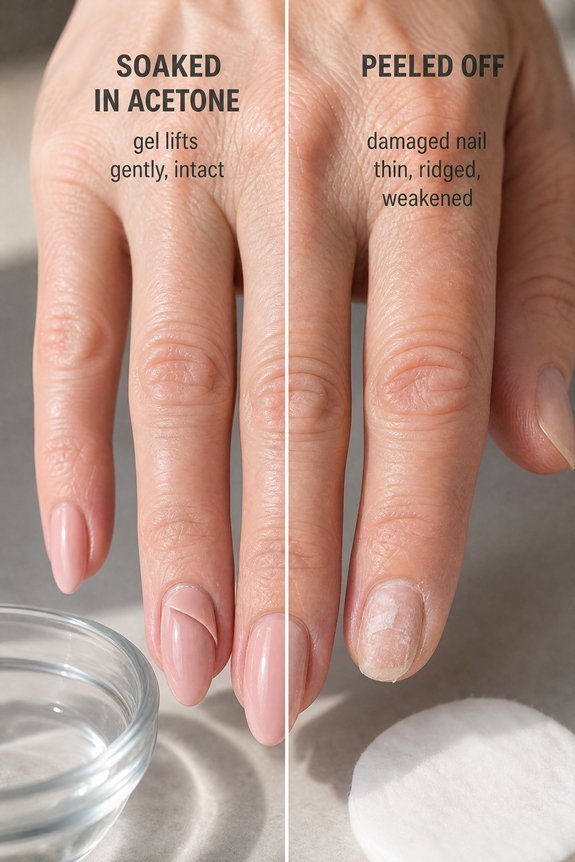
When it comes to gel manicures, we tend to focus on how often we’re booking appointments—but how the gel is removed matters just as much, if not more.
Picking, peeling, or prying gel off can pull away actual layers of your nail, leaving nails thin, rough, or fragile. That’s not necessarily about the gel itself. It’s about technique.
Removal technique matters.
A proper foil wrap, soaking in acetone for about 10–15 minutes, and gently lifting gel with a wooden orangewood stick held at a shallow angle tends to be gentler on nails.
Using metal tools, scraping aggressively, or rushing the process is more likely to wear down the nail plate over time.
Acetone often gets blamed for nail damage, but soaking in it mainly dries out the nail rather than harming it structurally.
Using a nail oil afterward can help restore moisture.
Before applying acetone-soaked cotton to your nails, dabbing petroleum jelly on cuticles and the surrounding skin helps protect against irritation.
As always, how your nails respond can vary from person to person, so pay attention to what works for you.
Warning Signs Your Nails Need a Gel Break Now
Sometimes our nails try to tell us something, and we keep booking appointments anyway.
Learning to notice those signals early may help reduce recovery time down the road.
Watch for these four warning signs:
- Keratin granulation — chalky, rough white patches after removal can mean surface damage is already happening.
- Nail sensitivity — tenderness, burning, or aching on bare nails may signal cumulative stress on the nail.
- Peeling and horizontal splitting at the free edge, where layers lift instead of breaking cleanly.
- Thinning or bending — if your nail flexes like paper, the nail plate may be weakened.
Everyone’s nails respond differently to gel manicures, and how quickly damage shows up (or heals) can vary based on your nail health, the products used, and how often you get fills.
If you notice any one of these signs, it’s worth pausing rather than pushing through.
Many nail professionals suggest giving your nails several weeks completely bare, moisturized, and undisturbed to recover, though the right amount of time can depend on how much damage has occurred. In more severe cases, nails may also show signs of thickening or fungal infection, which are indicators that a longer break and targeted treatment are necessary.
How Long to Rest Your Nails After Gel Manicure Damage
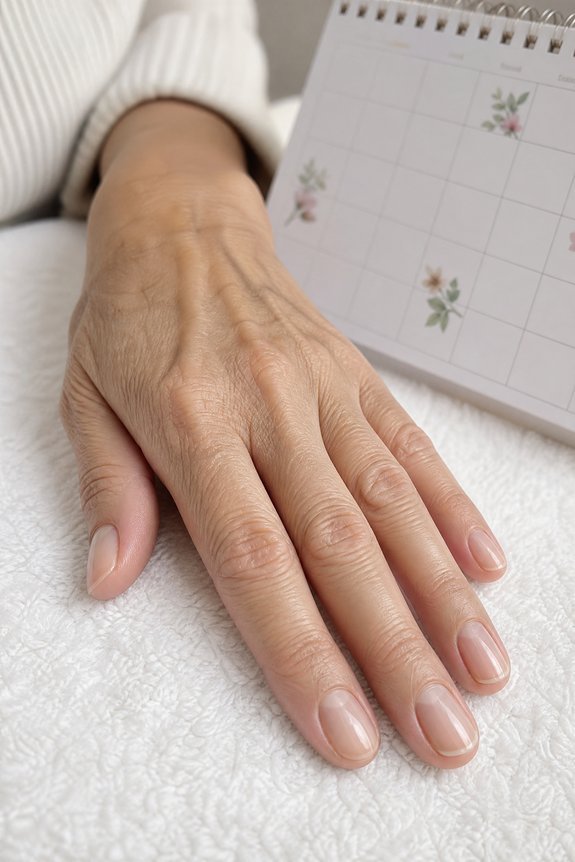
Knowing when to stop is one thing — knowing how long to actually stay stopped is another, and the answer really depends on how your nails are affected.
If you’re dealing with minor dryness or slight sensitivity, a one-to-two week break is often enough. This usually falls under mild dryness or surface roughness — nothing deep or structural.
If your nails feel weak, bend easily, peel in layers, or feel tender, they may need more time — often three to six weeks — before you see real improvement. This can vary depending on your nails and how much damage occurred.
For more noticeable thinning near the cuticle, plan on a longer grow-out period. Nails typically take a few months to fully replace themselves, so expect something in the range of three to six months before the affected area has grown out completely.
This kind of timeline can feel slow, but it helps to remember that damaged nail doesn’t repair itself in place — you’re waiting for healthy new growth to replace it. A good sign that things are on track: the new growth near your cuticle looks smoother and feels sturdier than the rest of the nail. During this period, applying cuticle oil daily can help keep the nail and surrounding skin hydrated and support healthier growth.
Cuticle Oils and Treatments That Protect Nails Between Gel Sets
Gel manicures can be tough on your nails — the acetone soaks, repeated removal, and time under UV light all take a toll.
That said, a simple between-set routine can help your nails feel and look healthier. Using cuticle oil regularly helps keep the nail plate hydrated and flexible, which may reduce splitting or peeling for some people.
Here’s a simple routine to consider:
- Apply cuticle oil daily — morning and night if you can manage it
- Massage the oil in around the nail folds and cuticle area to help it absorb
- Try layering oils — jojoba or almond oil, then a bit of vitamin E on top, if you want extra moisture
- Consider pairing oil with a vitamin B5 strengthener if your nails feel weak after gel removal
Results can vary depending on your nails and how consistent you are, but small daily habits like this are an easy way to support your nails between appointments.
How Long Does It Take Nails to Fully Recover From Gel Damage?

If you’ve ever peeled off a gel manicure and been left with thin, flexible nails, you know the frustration.
Recovery takes time, and there’s no shortcut to speeding up healthy nail growth—no oil or treatment can make it happen overnight.
Mild dryness or thinness often improves within a few weeks.
More significant thinning can take several months to fully grow out, though this varies a lot from person to person and depends on how much damage occurred.
Why does it take so long?
Nails have to grow out the damaged part before it disappears—there’s no way to repair the existing nail underneath.
Damage near the cuticle takes the longest to grow out, since it has to travel the full length of the nail before you can trim it away.
Damage closer to the tip clears up much faster since it grows out (or gets trimmed) sooner.
Staying consistent with moisture and protecting your nails in the meantime can help the process feel less frustrating, even if it doesn’t dramatically speed up growth.
Conclusion
Gel manicures don’t have to damage your nails — you just need a steady routine. A 2–3 week schedule between fills or removals works well for many people, but timing can vary depending on how fast your nails grow and how the gel was applied. Pay attention to your own nails: if they feel thin, sore, or start lifting at the edges, that’s a sign to give them a break. Using cuticle oil regularly can help keep nails and surrounding skin from drying out.
Taking occasional breaks between manicures may help nails recover, though how much time is needed can differ from person to person. Catching issues early — like peeling or splitting — is easier to manage than waiting until they get worse. Keeping a consistent, gentle routine is generally the best way to help your nails stay healthy over time.
References
- https://raiceshairbeauty.com/how-often-is-it-safe-to-get-gel-manicure/
- https://www.kirstymeakin.com/how-to-repair-your-nails-after-gel-polish/
- https://the1societysalon.com/how-often-should-you-really-get-a-gel-manicure-5-signs-your-nails-need-a-break/
- https://www.drmbernstein.com/blogs/nail-care/strengthen-damaged-nails-after-gel
- https://www.drmbernstein.com/blogs/news/strengthen-damaged-nails-after-gel
- https://www.everydayhealth.com/skin-care/is-it-safe-to-get-manicures-all-the-time/
- https://www.womenshealthmag.com/uk/beauty/body/a63725448/do-nails-need-a-break-from-gel/
- https://health.clevelandclinic.org/you-guessed-right-gel-nail-polish-is-bad-for-your-nails
- https://mylee.co.uk/blogs/news/how-often-should-you-take-a-break-from-gel-nails
- https://health.yahoo.com/your-body/dermatology/articles/gel-polish-really-doing-nails-230000242.html