What to Ask Your Hairdresser for When Your Hair Changes After Menopause
You’re standing in the salon chair, watching your stylist frown slightly at your roots, and suddenly you realize your hair just doesn’t behave the way it used to. Menopause changes everything—texture, density, even how colour sits. We need different strategies now, and most of us don’t know what to actually ask for. Fortunately, the right questions can completely transform your next appointment.
Key Takeaways
- Ask for layered length cuts with feathered face framing and graduated crown layers to lift roots and create fullness without sacrificing length.
- Request lightweight, sulfate-free products like volumizing mousse and dry shampoo to avoid weighing down finer, post-menopausal hair.
- Tell your stylist about menopause upfront so cuts, colour placement, and treatments can be tailored specifically to hormonal hair changes.
- Ask about balayage or painted highlights away from the root to add dimension and reduce visible thinning without heavy chemical processing.
- Request scalp exfoliation and serum treatments during appointments, as scalp health directly supports hair growth after menopause.
How Menopause Actually Changes Your Hair
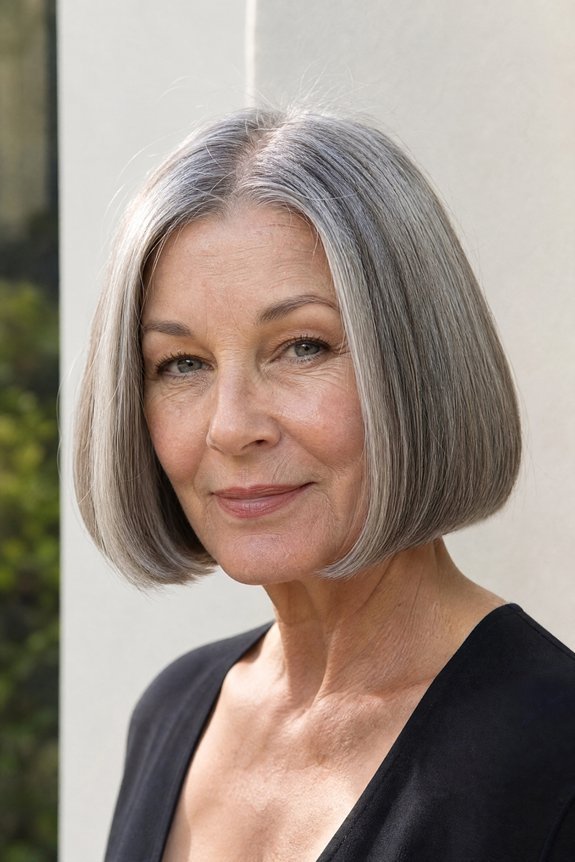
When estrogen levels drop during menopause, your hair doesn’t just thin—it fundamentally changes its texture, growth pattern, and density all at once.
This hormonal shift triggers follicle miniaturization, meaning each strand literally shrinks in diameter.
Your hair gets finer, drier, and slower-growing.
We’re not imagining it.
The hair we’d at forty simply isn’t coming back unchanged, and that’s okay.
Why Your Stylist Needs to Know You’re in Menopause
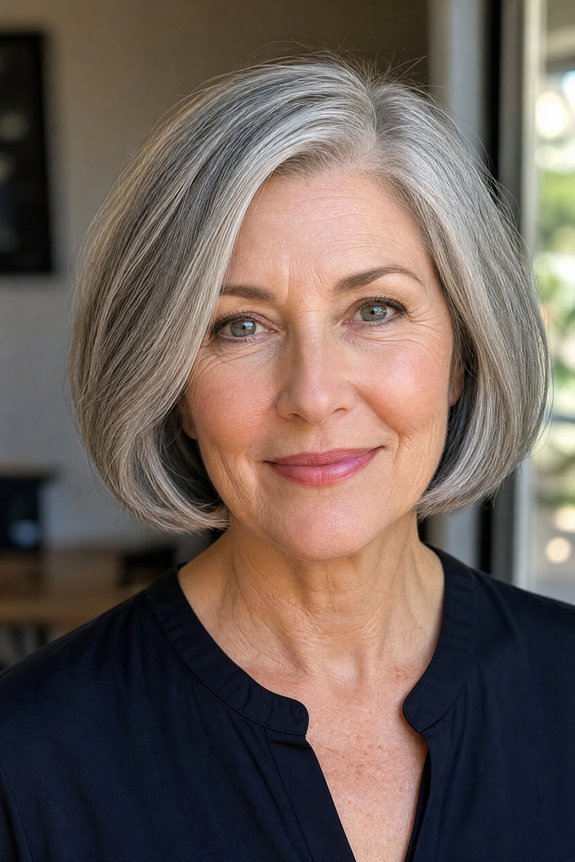
Most stylists are working with incomplete information if you haven’t told them you’re going through menopause. This isn’t oversharing—it’s practically a medical disclosure. Your hormonal timeline changes everything they’re working with.
| What They Assume | What’s Actually Happening |
|---|---|
| Product buildup | Scalp dryness |
| Bad haircut growing out | Texture shift |
| Neglect | Hormonal thinning |
We owe ourselves better results.
Ask About a Cut That Adds Volume Without Sacrificing Length
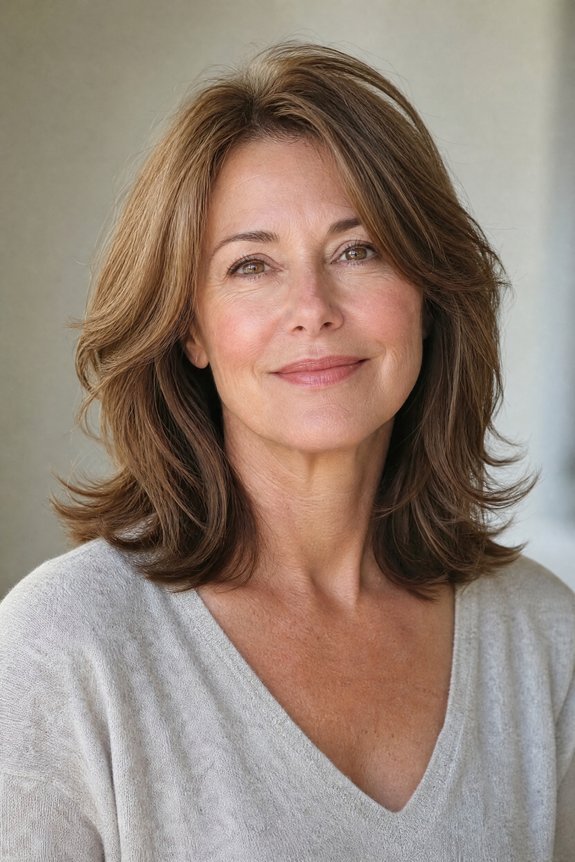
Once your stylist understands what’s happening hormonally, the next conversation gets a lot more specific.
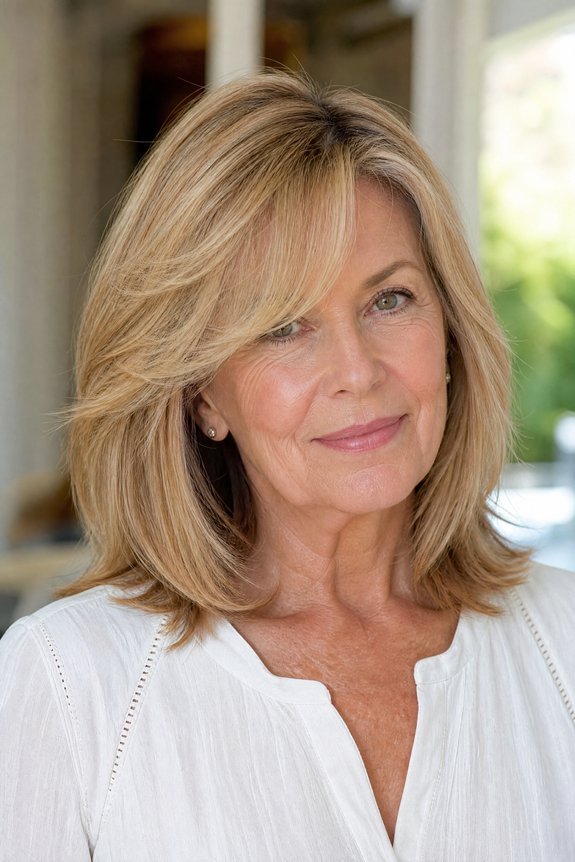
Ask for a layered length cut—it keeps the length we love while lifting flatness away from the roots. Request volumizing texturizers, too. They remove bulk strategically, so hair moves instead of drooping. One conversation, and you’ve already changed everything.
The Best Haircuts for Thinning Menopausal Hair
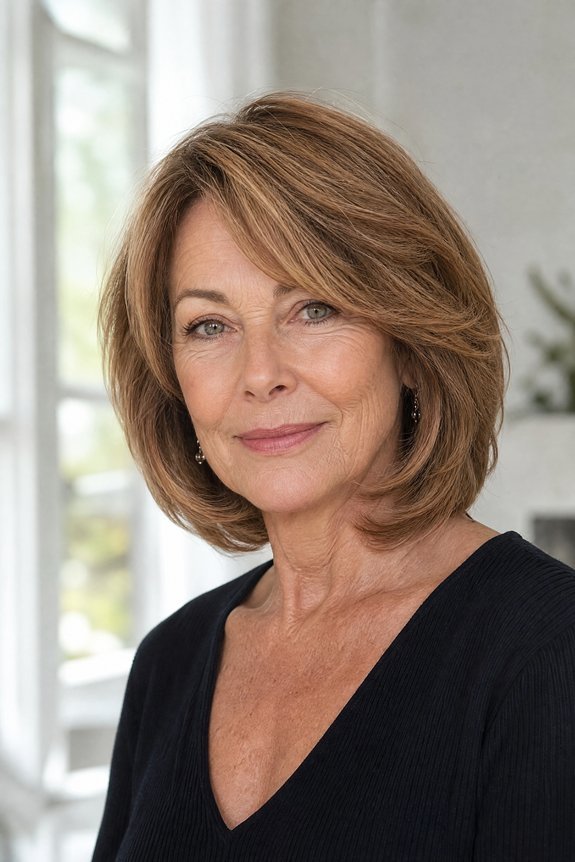
| Haircut | Why It Works |
|---|---|
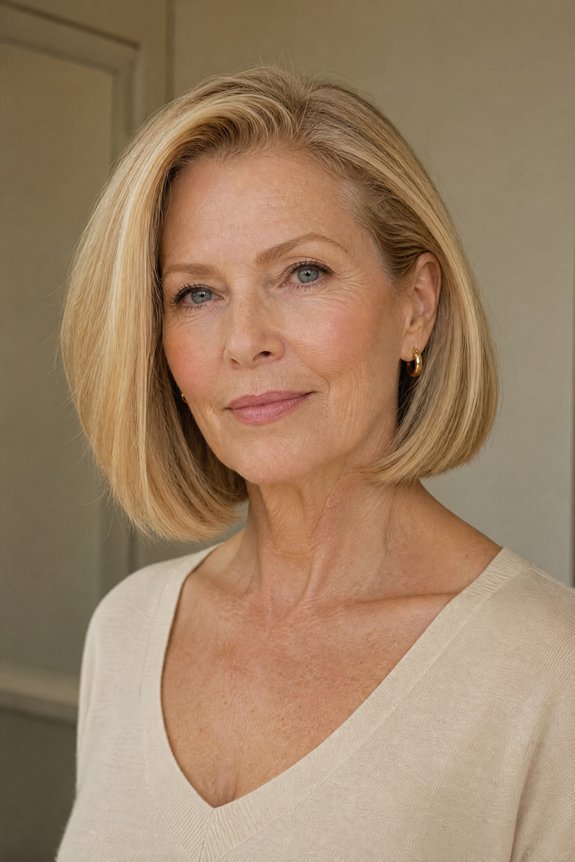
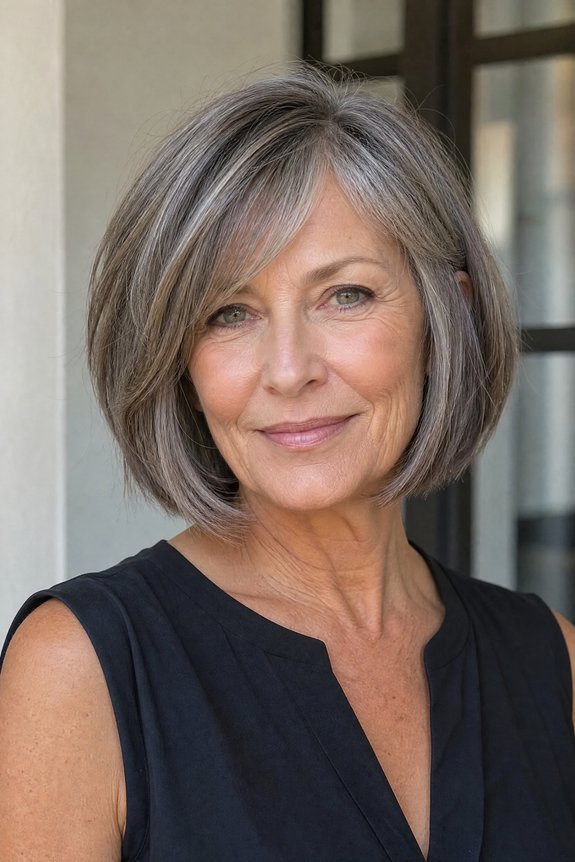
| Short bobs | Removes weight, creates fullness |
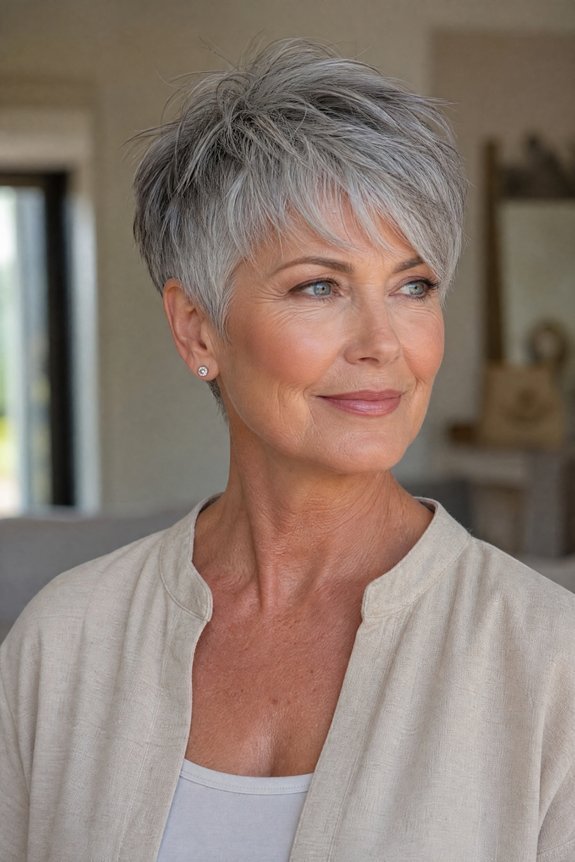
| Feathered pixies | Lifts fine hair visually |
| Layered lobs | Adds movement, reduces flatness |
| Blunt cuts | Maximizes perceived thickness |
How Layers Can Make Fine Menopausal Hair Look Fuller
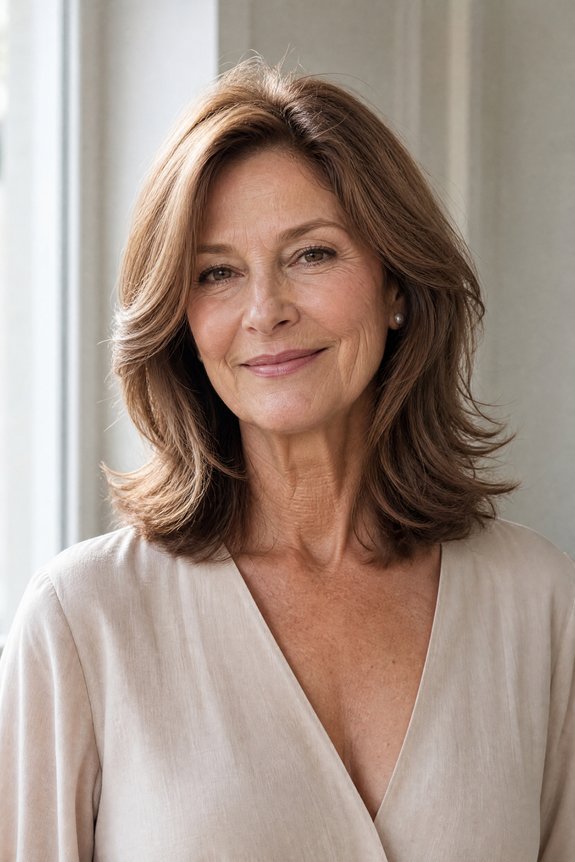
Layers are one of the best tools we’ve for fighting the flat, limp look that fine menopausal hair tends to default to.
Here’s what to ask for:
- Feathered layers around the face
- Graduated layers at the crown
- Soft layers through the mid-lengths
- Minimal bulk at the ends
Movement creates the illusion of fullness.
Ask Your Stylist About Scalp Health Treatments
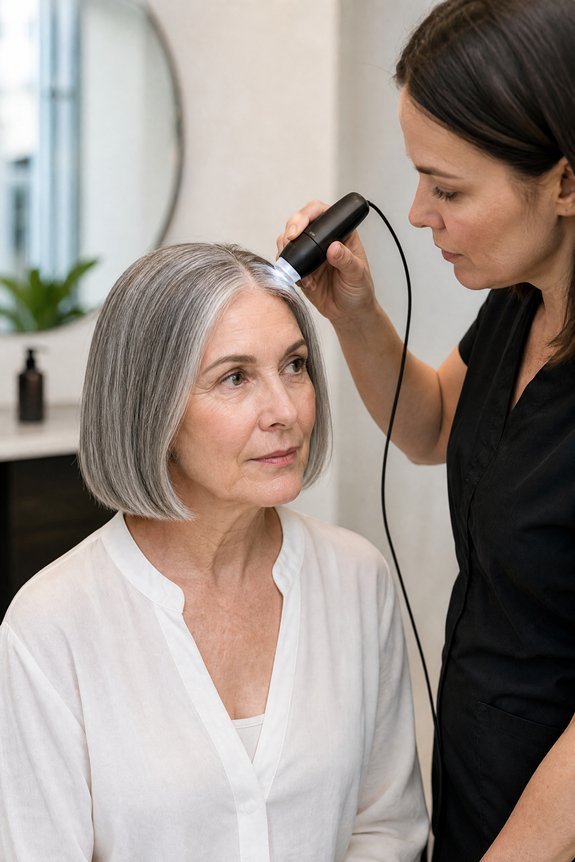
Most of us focus so much on the hair itself that we forget the scalp is where everything starts—and after menopause, that patch of skin underneath deserves a serious conversation with your stylist.
Ask about scalp exfoliation to clear buildup, and explore serum layering for dryness and thinning. Your scalp’s basically a garden—neglect the soil, nothing grows.
Which Colouring Techniques Work Best for Thinning Hair
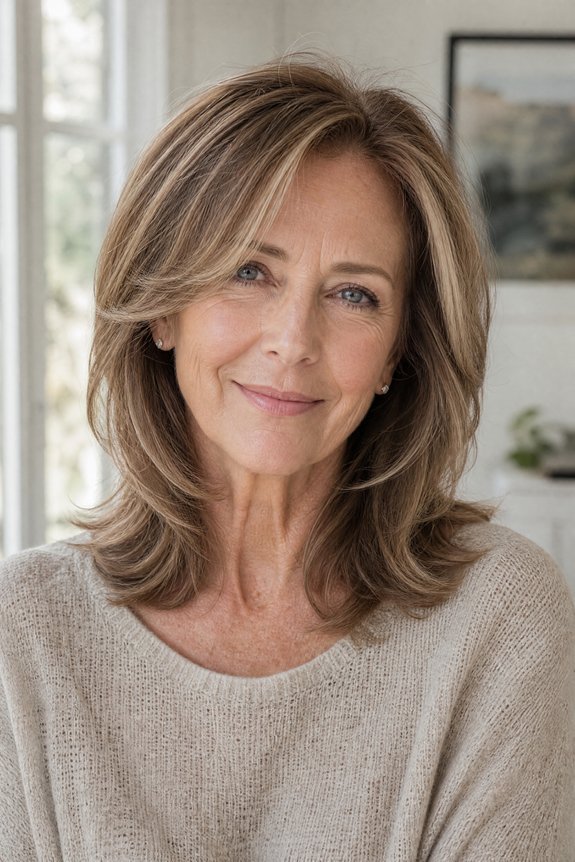
Colour can actually work in your favour when hair starts thinning—if you know which techniques to ask for. We’ve found these work best:
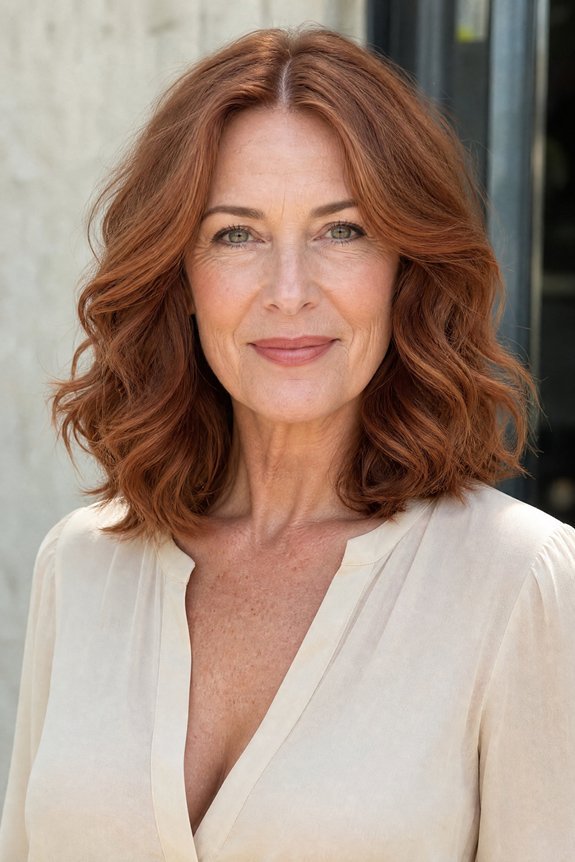
- Balayage for soft, natural depth
- Painting highlights away from the root for lift
- Toning to unify colour without weight
- Strategic root touchups to create fullness
Less is genuinely more here.

❀Seamless Nano Beads✿ Nano Beads are 90% Smaller than the traditional Micro bead rings, so it hides extremely well in any color and thin hair; No Glue, No Clip, No heating to your hair, quite safe, lightweight and comfortable on your scalp.

【I Tip Cold Fushion】SEGO I Tip Pre Bonded Hair Extension is made from Italian Keratin which is a protein component found in the natural hair. keratin glue is not harsh on your hair and scalp.

【100% Real Human Hair 】: 100% real human hair therefore is particularly beautiful and natural. The special shine of the human hair immediately catch the eyes. Well-crafted standard weft, tangle free, bouncy, silky soft, neat with natural hair glossy.
Does Hair Colouring Make Menopausal Hair Worse?
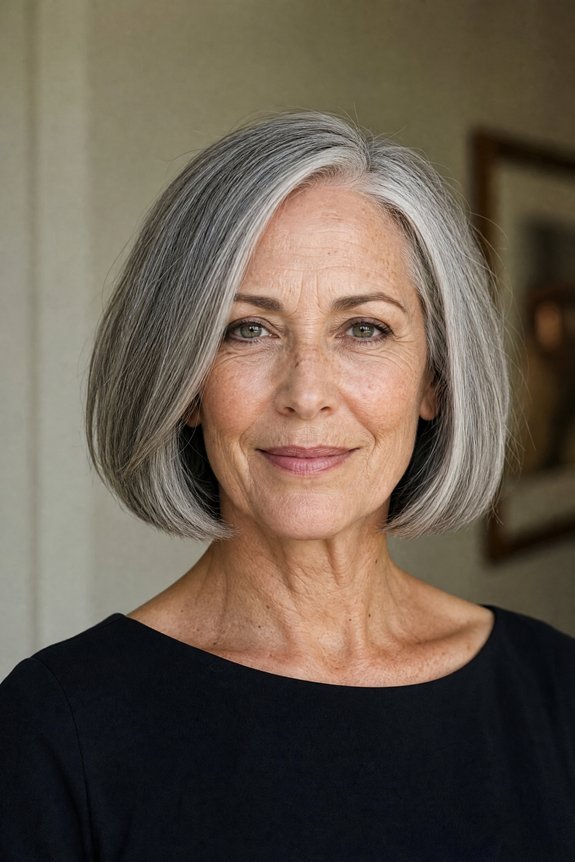
That said, it’s fair to wonder whether all that colouring is actually making things worse. Menopausal hair does develop increased chemical sensitivity, meaning it can feel drier or more fragile after processing. Pigment retention also drops, so colour fades faster.
But skipping colour won’t magically restore thickness. The real fix is adjusting your approach, not abandoning it altogether.
Ask for Lightweight Products That Won’t Weigh Hair Down
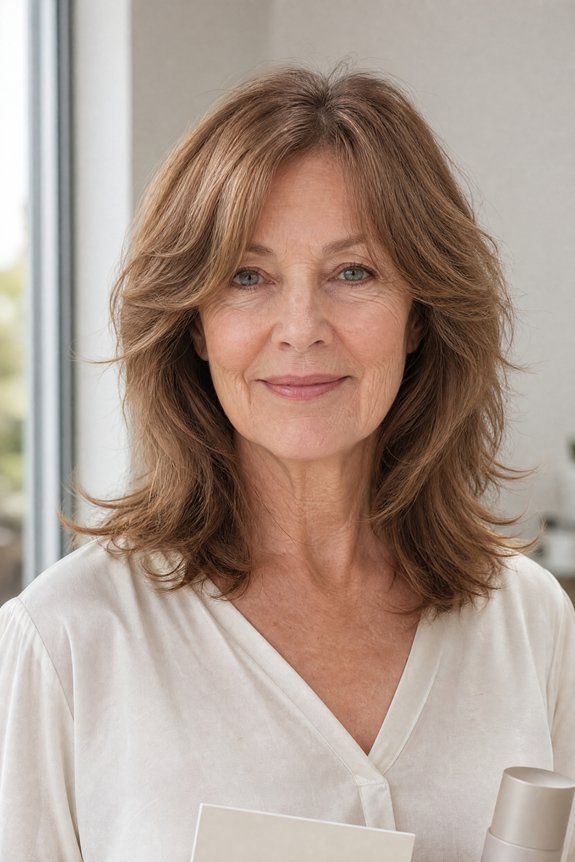
Heavy products are the enemy of fine, menopausal hair—they flatten what little volume we’re working with and make strands look lank by midday.
Ask your stylist for:
- Weightless mousse
- Volumizing serum
- Light-hold sprays
- Dry shampoo
These lift roots, add body, and won’t drag hair down by noon.
How Often Should You Wash Thinning Hair After Menopause?
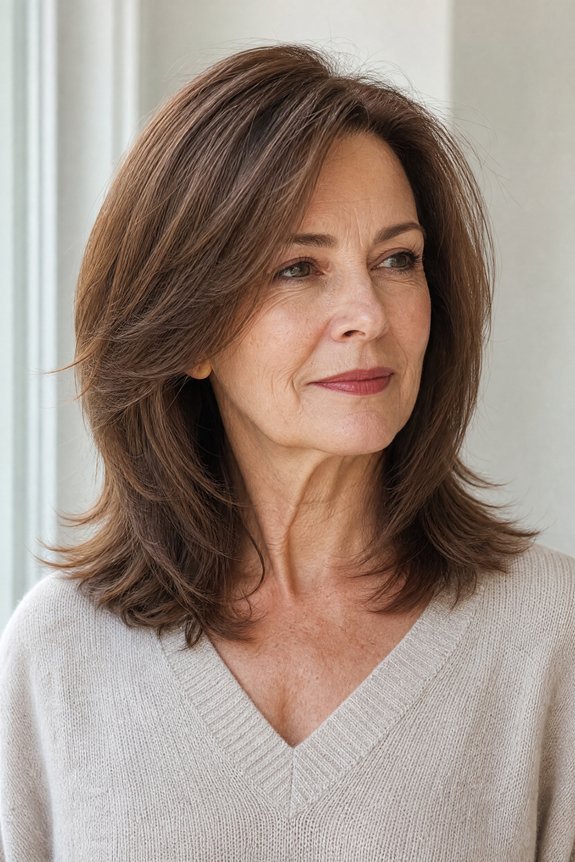
Washing thinning hair too often strips away the natural oils that keep fragile strands protected, but washing too infrequently lets buildup weigh everything down—so we’re caught in an awkward middle ground most of us weren’t warned about.
Aim for every two to three days, use a sulfate-free shampoo, and keep dry shampoo nearby for the days in between.
The Right Way to Talk to Your Hairdresser About Hair Loss
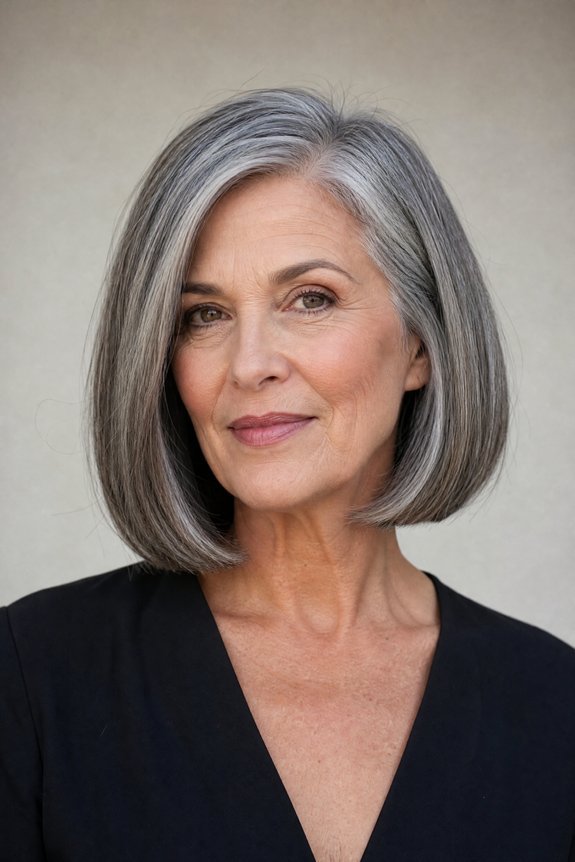
Most of us have sat in that salon chair and said absolutely nothing about what’s actually bothering us, smiling through a cut that leaves us looking thinner on top than when we walked in.
Next time, try this:
- Mention thinning upfront
- Ask for volume-focused cuts
- Request realistic expectations
- Ask for emotional support resources
Ask Whether a Keratin Treatment Is Safe for Your Hair Type
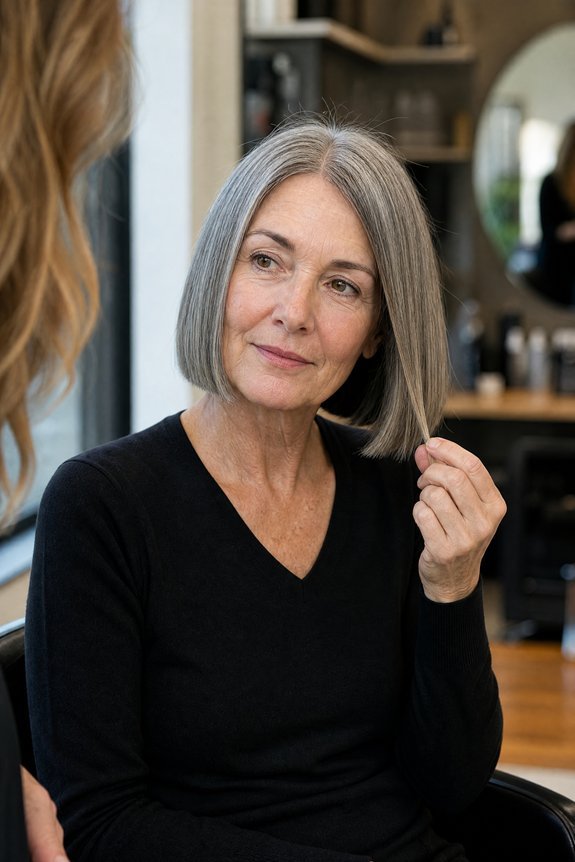
Once we’ve figured out how to actually talk to our hairdresser about thinning, the next smart question to ask is whether a keratin treatment is right for your hair. Protein treatments can strengthen strands, but they’re not one-size-fits-all.
Ask specifically about smoothing options that won’t weigh fine hair down. Your hairdresser should tailor the formula to your texture, not just your frizz.
Heat Styling Adjustments for Drier, More Fragile Hair
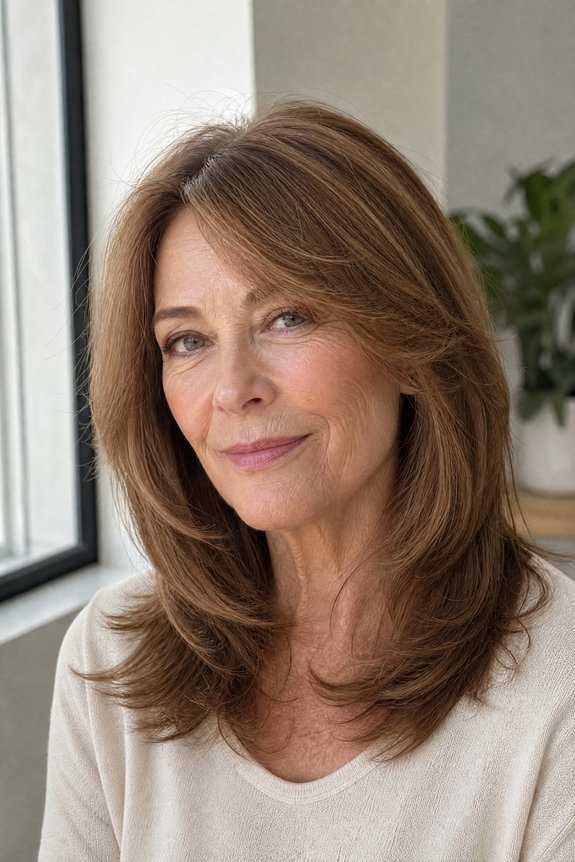
Heat does more damage to post-menopausal hair than most of us realize, because estrogen loss leaves strands drier, more brittle, and far less forgiving of a 450-degree flat iron.
Ask your stylist about:
- Low heat settings under 300°F
- Ceramic tools for even heat distribution
- Moisture serum applied before styling
- Protective styling to minimize daily heat exposure
When to See a Trichologist Instead of Your Hairdresser
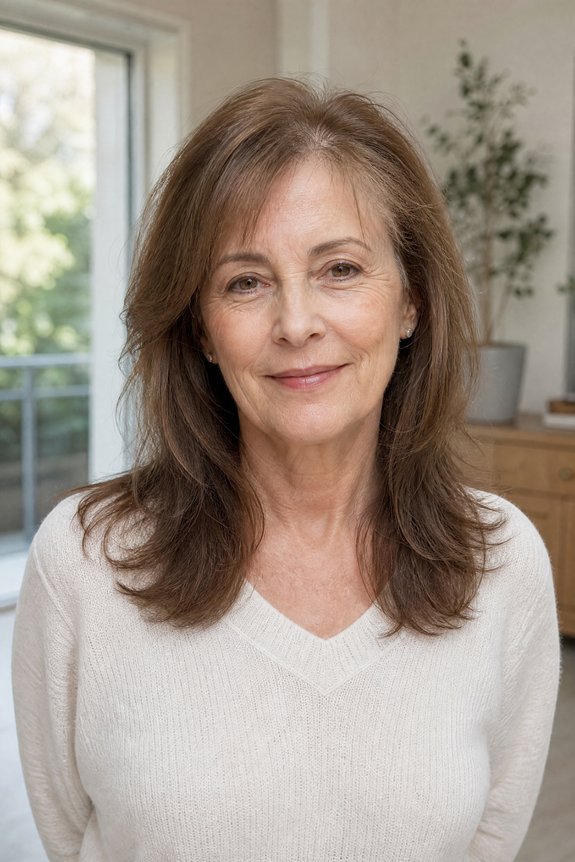
Your hairdresser is talented, but she’s not a medical professional—and when hair loss crosses from “thinning a little” into “I can see my scalp in three different places,” that distinction matters.
A trichologist orders a scalp biopsy, runs a hormone assessment, and finds answers we can’t get from a salon chair.
Know the difference. Use it.
How to Maintain Your Style Between Salon Appointments
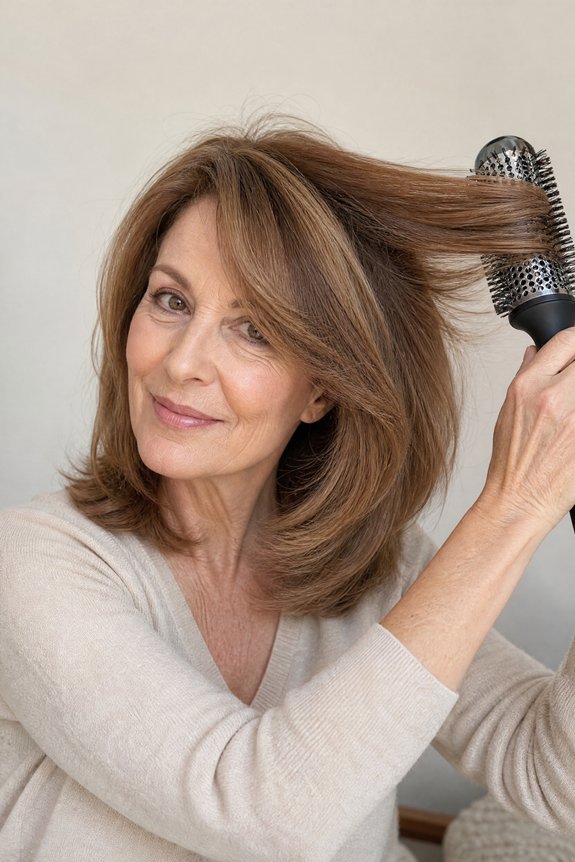
Now that we’ve sorted out when to hand things over to a specialist, let’s talk about what happens between appointments—because six to eight weeks is a long time, and most of us don’t have the budget or the schedule to sit in a salon chair every two.
- Use dry shampoo at the roots
- Sleep on a silk pillow protector
- Refresh waves with a diffuser
- Finger-detangle before brushing
Signs Your Hair Is Improving and What to Do Next
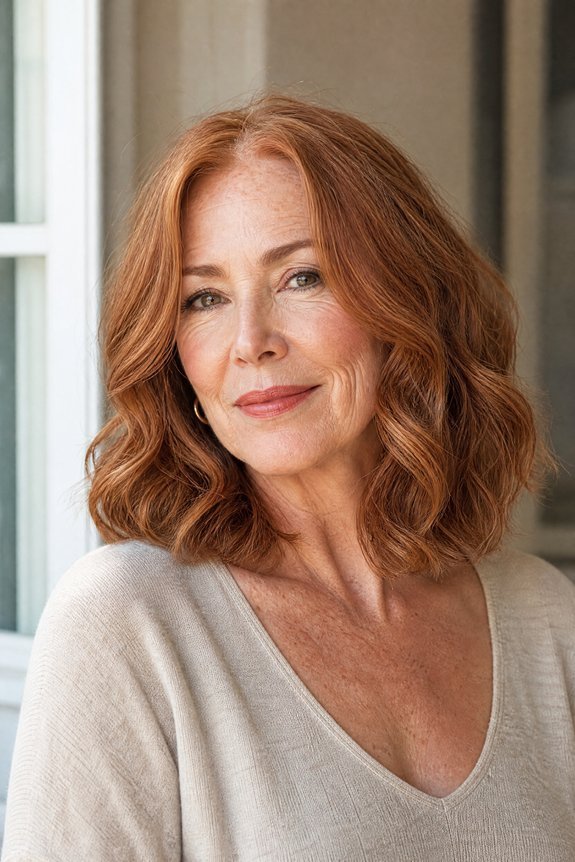
After months of tweaking your routine, the improvements can sneak up on you—less breakage on the brush, more definition in your natural texture, and a general sense that your hair is actually cooperating for once.
Breakage reduction and shine return are your green lights. When we spot those signs, we adjust: ask your stylist about graduating to lighter protein treatments and locking in those gains.
Conclusion
Your hair after menopause isn’t a lost cause—it’s just a new chapter. As they say, every ending is a new beginning, and that applies to your hair, too. We’ve got the tools: smart cuts, the right products, honest conversations with our stylists. Start with one change, see what shifts, and build from there. You don’t have to figure this out alone, and you definitely don’t have to settle.