Gel Vs Dip Powder Nails After 50: Which Is Better for Thin or Brittle Nails?
After 50, nails can become more prone to peeling, splitting, or general weakness—often linked to hormonal changes, nutritional shifts, or dry winter weather. These changes don’t affect every woman’s nails the same way, but many look to gel or dip powder manicures for extra support. Both systems claim to strengthen and extend the life of a manicure, though they work differently and may suit some nail types better than others. Below, we look at how gel and dip powder each interact with thin or brittle nails, so you can decide which option might work best for you.
Key Takeaways
- Builder gel flexes with the natural nail, making it generally better suited than rigid dip powder for thin or brittle nails after 50.
- Dip powder’s hard shell and cyanoacrylate adhesive can stress fragile nails and risk allergic sensitization with repeated exposure.
- Falling estrogen and reduced circulation after 50 weaken nails, making gentle application techniques and minimal buffing especially important.
- Long acetone soaks strip nail lipids and worsen brittleness; foil-wrap removal limited to 10–15 minutes reduces this damage.
- Watch for persistent thinning, splitting, or soreness after appointments—these signal a need for a break and possible dermatologist consultation.
Why Nails After 50 Get Thinner, Drier, and More Brittle

After 50, nails can genuinely become more fragile—and it’s not just about skipping a biotin supplement. One factor is the nail matrix, the area under your cuticle where new nail growth starts. For many women, this area thins with age, which can slow nail growth, affect keratin structure, and lead to the longitudinal ridges some of us notice.
Hormonal shifts play a role too. Falling estrogen levels during perimenopause and after can reduce moisture, lipids, and flexibility in nails for some women, making them more prone to cracking, peeling, or splitting. Reduced circulation may also mean fewer nutrients reaching your fingertips, and common deficiencies in iron, protein, or essential fatty acids can add to the problem.
Not every woman experiences these changes the same way or to the same degree—genetics, health conditions, and daily habits all factor in. If nail changes persist despite good care, it may be worth asking a doctor about hormone testing to check for underlying imbalances. Still, understanding what’s behind nail changes can help you make more informed choices about nail care and products going forward. It’s also worth knowing that thyroid dysfunction, particularly hypothyroidism, becomes more common in women over 40 and can produce nail changes that closely mirror those associated with menopause.
Gel vs Dip Powder: Which Actually Protects Brittle Nails Better?
Choosing between gel and dip powder when your nails are thin or fragile isn’t just about looks—it can also affect how well your nails hold up day to day.
Dip powder creates a hard, rigid shell. For some people, that rigidity can put extra stress on nails that already flex and bend, which may lead to cracking or breakage.
A few things worth knowing:
- Builder gel tends to be more flexible and can move with your nail instead of resisting it
- Rigid dip layers may crack more easily on nails that are already brittle, though this varies from person to person
- Removing dip powder usually takes a longer acetone soak, which can dry out your nails and skin over time
- Gel removal is often gentler, but results still depend on the products and technique used
- Builder gel can add some structure without making nails feel stiff or overly hard
- Gel also works well for delicate styles like a thin-line French tip, since it doesn’t add the bulk that dip powder can create on already fragile nails
If your nails are thin or prone to breaking, a more flexible option like builder gel may feel like a better fit—but the right choice really depends on your own nails, your nail tech’s approach, and the specific products used. Dip powder is built on cyanoacrylate adhesive layered with milled polymer, which is worth knowing if you have any sensitivities or allergies before committing to the system.
How Removal and Buffing Damage Brittle Nails After 50
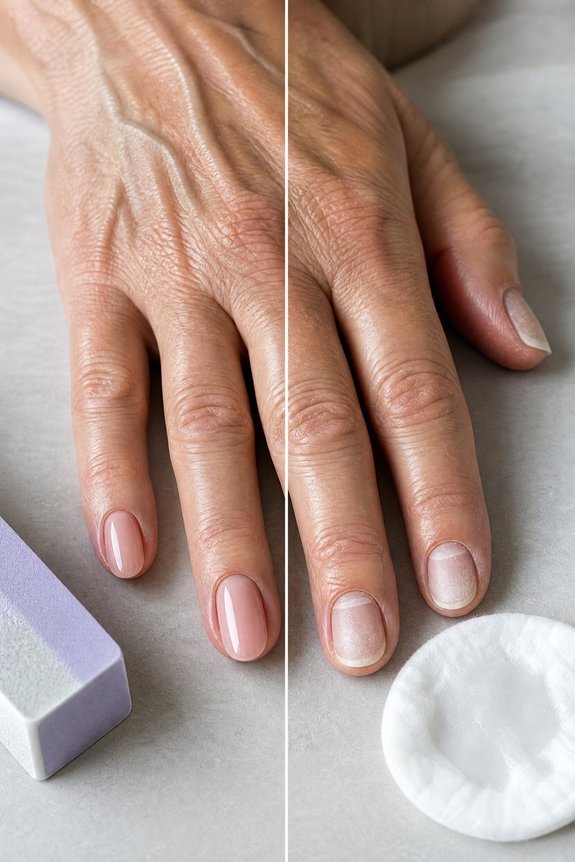
Getting a manicure removed sounds simple—soak, file, done. But for some of us, that process can cause real damage to nails over time. Long acetone soaks can strip natural oils, leaving nails feeling dry, brittle, or prone to splitting. This may be more noticeable for people whose nails already tend toward dryness, since nails can lose moisture and flexibility with age—though this varies quite a bit from person to person. These changes often coincide with hormonal shifts that reduce estrogen levels, which can further disrupt the body’s ability to retain moisture and maintain flexibility.
Aggressive buffing can make things worse. The buffing techniques used to prep or smooth gel and dip products can wear down the nail’s protective layers, which may thin nails that are already fragile. Filing off coatings instead of soaking them off properly can lead to uneven, weakened nails.
If you’re noticing more brittleness than usual, switching to gentler removal methods—like non-acetone removers or shorter soak times—may help reduce dryness. Small changes in how you remove polish can help protect the strength and thickness your nails still have, though results will vary depending on your nail type and habits. Acetone penetrates the nail plate within 90 seconds, depleting the ceramides and intercellular lipids that maintain moisture and structural integrity, which means even brief soaks carry real consequences for already-fragile nails.
Gel’s UV Risk and Dip’s Allergens: What Matters Most After 50
Both gel and dip powder come with their own set of risks, and they’re not the same kind of risk—which matters if your nails have gotten thinner or more brittle over time.
Here’s what’s worth knowing:
- Gel lamps emit UVA light, and that exposure adds up over repeated visits—worth considering if you’re already mindful of sun exposure on your hands
- Sunscreen on your hands or UV-blocking gloves during curing can reduce that exposure
- A systematic review of nine studies found that prolonged and repeated UV nail lamp exposure may pose a low risk of skin cancer, though the overall evidence remains weak.
- Dip systems carry a real risk of acrylate sensitization—once a reaction develops, future exposures tend to trigger stronger responses
- Allergic contact dermatitis can irritate the skin around nails that are already thin or dry, making things worse
- If you have eczema or a history of adhesive sensitivity, it’s worth talking to a dermatologist before trying dip powder
How to Use Gel or Dip Without Wrecking Brittle Nails
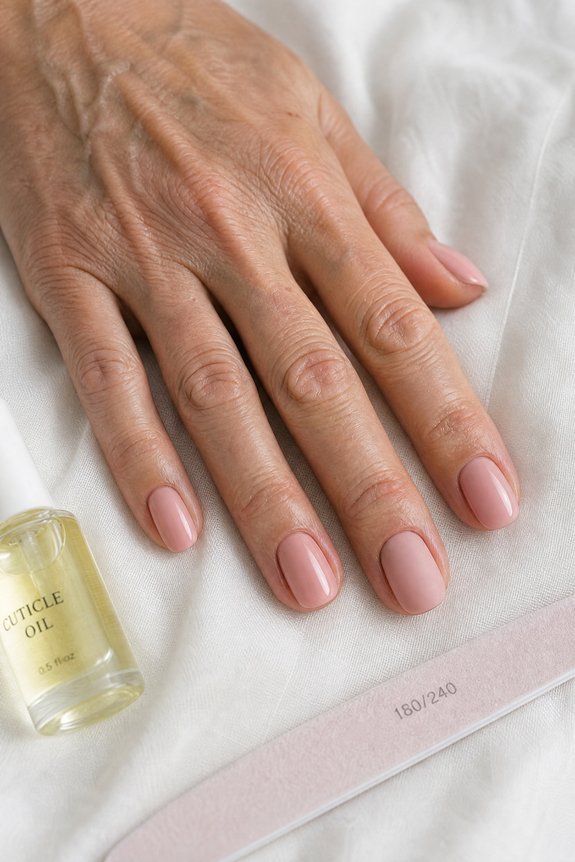
Knowing the risks is one thing—knowing what to do about them is another. Many people can still enjoy gel or dip manicures while protecting their natural nails, with a bit more care in how it’s done.
Start with a hydration routine: apply cuticle oil and a bland emollient (like plain petroleum jelly) twice daily for one to two weeks before your appointment. Keep nails at a shorter length, ask your tech for thin product layers, and never peel enhancements off yourself—this can strip layers of the natural nail.
Results vary depending on your natural nail condition, the products used, and the salon’s technique, so treat the tips below as general guidance rather than guarantees.
| Gel Tips | Dip Tips |
|---|---|
| Ask for light etching only; skip full buffing | Ask your tech to avoid heavy filing or drill use |
| Request thin layers with minimal product at the free edge | Fewer dip layers may mean less rigidity |
| Consider a break of 1–2 weeks between applications | Consider a 7-day rest between applications |
| Ask about foil-wrap acetone removal (roughly 10–15 minutes) instead of prying | Ask your tech to break the top seal before soaking, rather than filing it off |
| Keep up with cuticle care; avoid cutting cuticles | Skip dip powder if you have active nail damage or infection |
After removal, using a strengthening product that contains keratin or biotin can help rebuild and protect nails as they grow out, making recovery faster between manicure appointments.
If your nails don’t seem to be tolerating gel or dip well—persistent peeling, thinning, or soreness—it may be worth taking a longer break or talking to a dermatologist, since nail health can vary quite a bit from person to person.
Conclusion
We get it—both options can feel like a gamble, so why bother? Fair question. But bare, unprotected nails can chip and snag too, especially if your nails are already thin or brittle. For many people, builder gel—applied thin and kept short—may give fragile nails a bit more support. Results can vary depending on your nail condition and the products used, so it helps to hydrate before and after application, take breaks between services, and skip aggressive buffing. Your nails aren’t a lost cause—they may just need a gentler routine.
References
- https://beautynexuspro.com/product-reviews/is-gel-or-dip-better-for-your-nails
- https://www.youngnails.com/blogs/news/is-dip-or-gel-better-for-thin-nails
- https://scienceinsights.org/is-dip-healthier-than-gel-for-your-nails/
- https://mynailartists.com/blog/dipping-powder-nails-vs-gel-nails-pros-and-cons/
- https://beautynexuspro.com/product-reviews/is-dip-nails-better-than-gel
- https://www.huffpost.com/entry/powder-dip-gel-manicures-better_l_5dc5a2c9e4b00927b23287df
- https://academic.oup.com/bjd/article/195/Supplement_1/ljag086.300/8718141
- https://www.thelocalgem.com/blog/gel-vs-dip-powder-nails
- https://beautynexuspro.com/natural-beauty/is-nail-dip-powder-safe
- https://www.drdanastern.com/nail-news/menopause-nail-