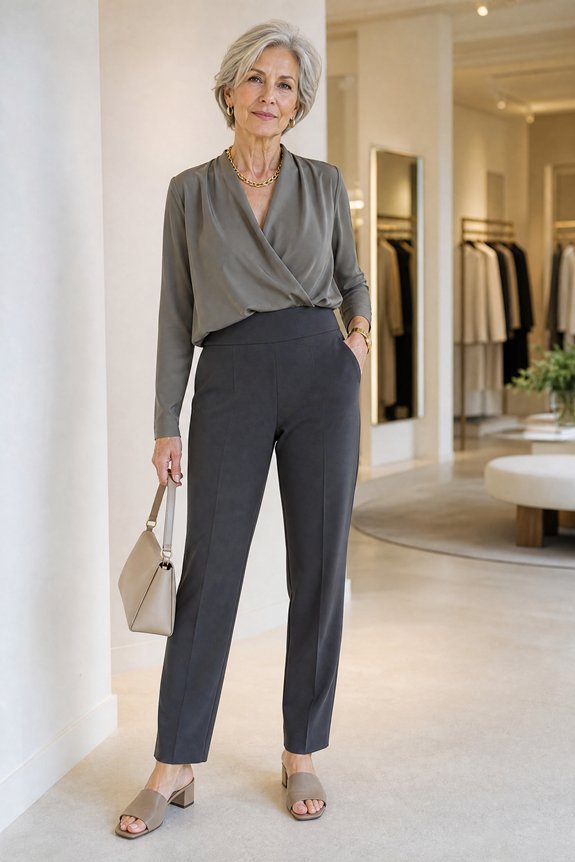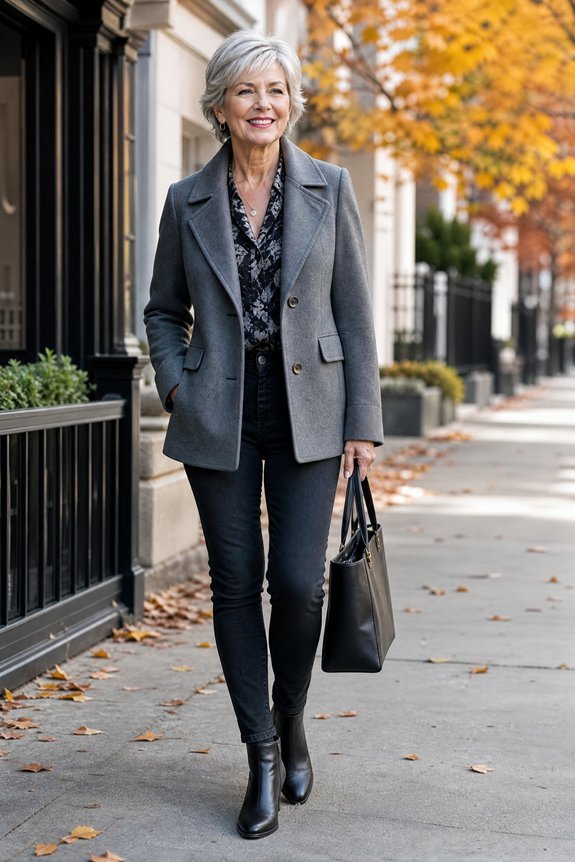
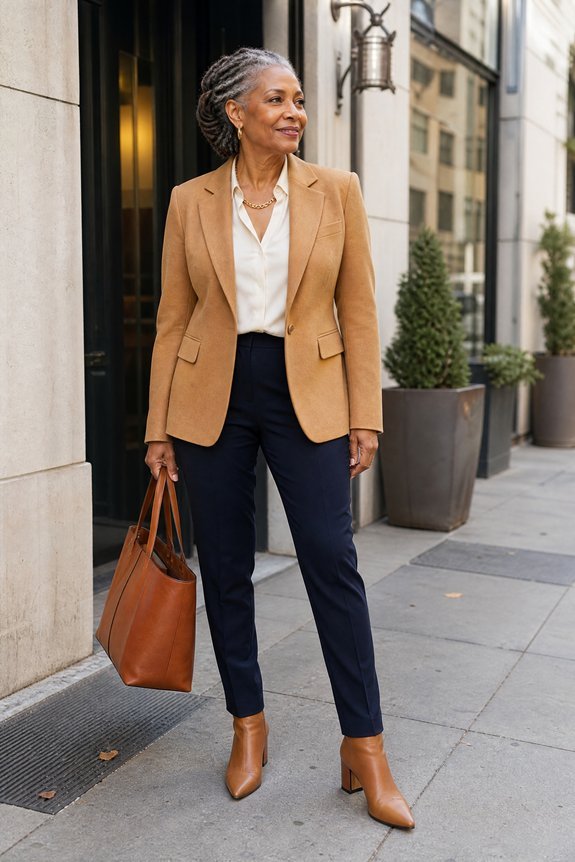
How to Find the Most Flattering Jacket Length for Your Body
A jacket can fit correctly through the shoulders and still feel wrong once you see the whole outfit. Often, the hem is creating a visual break in an awkward place—or the jacket is simply too short or long for what you need it to do.
There is no single jacket length that flatters every woman. The best choice depends on the jacket type, your torso-to-leg proportions, where the hem sits on your body, and what you are wearing underneath. The goal is not to follow a rigid body-shape rule. It is to understand what each length does so you can choose deliberately.
Key Takeaways
- Choose the jacket’s function first. A blazer, denim jacket, rain shell, and winter coat need different amounts of length and coverage.
- Do not rely on height alone. Torso length, leg length, bust, hips, and the rise of your trousers all affect where a jacket appears to end.
- A cropped jacket emphasizes the waist and shows more of the leg line; a hip-length jacket is versatile; a longline jacket creates a longer outer column.
- Measure the center-back length of a jacket you already like and compare it with product measurements whenever they are available.
- Correct shoulder, bust, hip, sleeve, and layering fit matter more than achieving a supposedly perfect hem position.
Start With the Jacket’s Purpose
Before judging proportions, decide what the jacket must do. A cropped leather or denim jacket is mainly a styling layer. A work blazer must sit properly when you stand, sit, and reach. A rain jacket needs enough length to protect you, while a winter coat must cover the layers beneath it without restricting movement.
This prevents a common shopping mistake: choosing a visually appealing length that does not suit the garment’s job. A short rain jacket may create a longer-looking leg line, but that advantage means little if water runs onto your trousers. Likewise, an elegant long coat may be inconvenient if you drive frequently or need easy movement.
How Different Jacket Lengths Change an Outfit
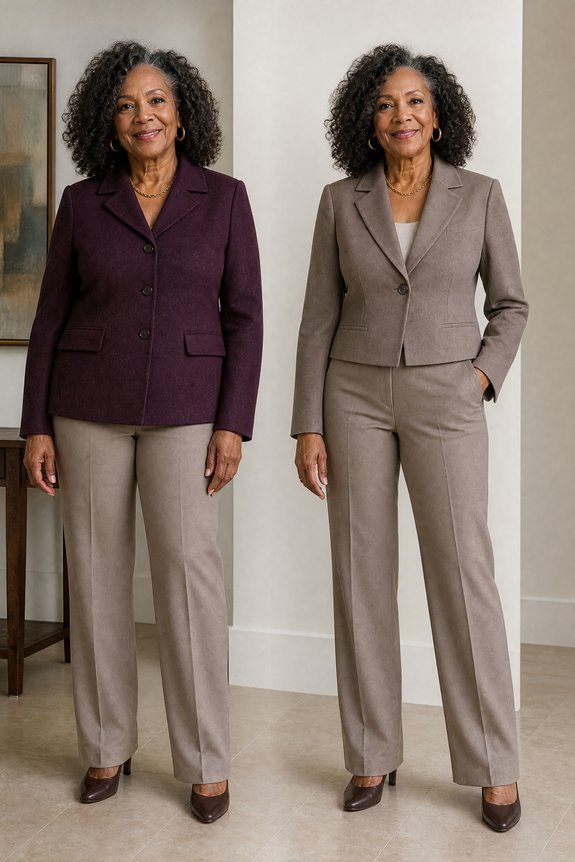
| Jacket length | Typical visual effect | Often works well with |
|---|---|---|
| Cropped or waist length | Highlights the waist and leaves more of the lower body visible | High-rise trousers, wide-leg jeans, skirts, and dresses |
| High-hip length | Creates a short upper section without being sharply cropped | Jeans, casual trousers, and simple day dresses |
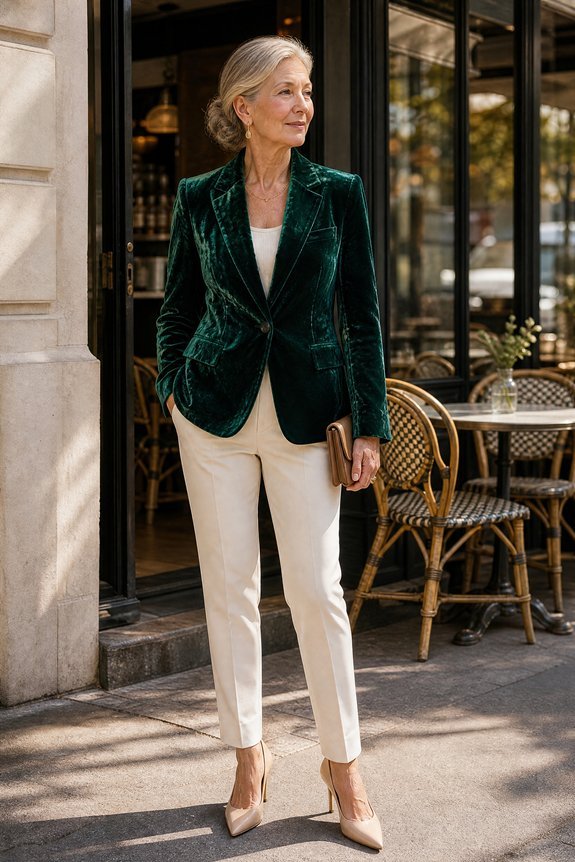
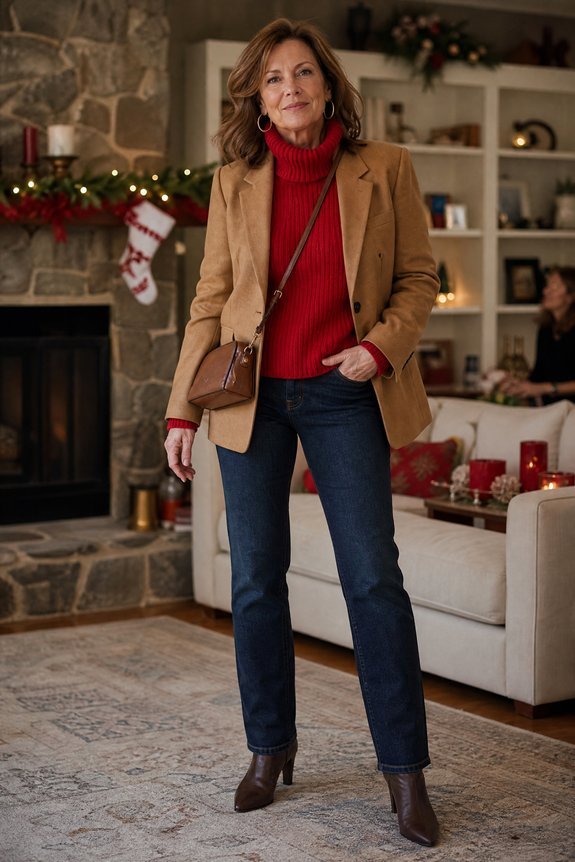
| Full-hip length | Provides versatile coverage and a traditional blazer proportion | Straight trousers, jeans, workwear, and layered outfits |
| Below-hip or mid-thigh | Creates a longer outer line and more coverage | Slim, straight, or wide-leg trousers and shorter dresses |
| Knee length or longer | Makes the coat a dominant vertical element | Winter outfits, dresses, tailoring, and streamlined layers |
These descriptions are starting points, not promises. A boxy cropped jacket behaves differently from a fitted cropped jacket, and a soft long cardigan behaves differently from a structured longline blazer.
Do Not Choose Jacket Length by Height Alone
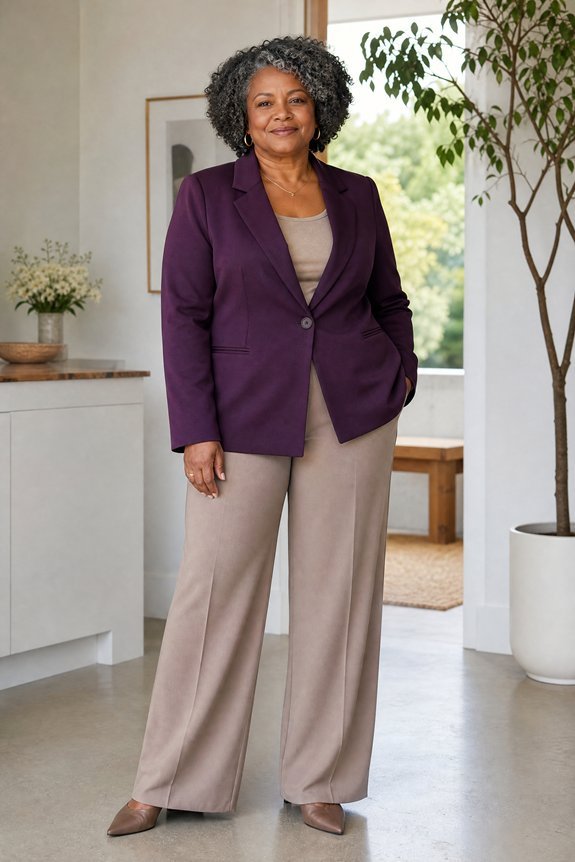
Petite women are often told to avoid long jackets, while tall women are told to avoid cropped ones. Those rules are too simple. Two women of the same height may have very different torso and leg lengths, so the same jacket can land at different points and create a different balance.
If you have a longer torso and proportionally shorter legs, a waist- or high-hip-length jacket can reveal more of the lower body. If you have a shorter torso and longer legs, you may prefer the grounding effect of a hip-length or longline jacket. Neither choice is mandatory.
Petite, regular, and tall ranges can also change more than the hem. Shoulder width, waist placement, pocket position, and sleeve length may be adjusted too. When a regular jacket seems wrong everywhere—not just at the bottom—try the appropriate height range rather than focusing only on shortening the hem.
Pay Attention to Where the Hem Lands
A jacket hem creates a horizontal line, so it naturally brings some attention to the area where it ends. This does not mean a hem must never land at the fullest part of your bust, waist, or hips. It simply means that placement will be more noticeable.
If you want a smoother line over fuller hips, compare a jacket that ends just above the fullest point with one that clears it and falls below. If you want to define your waist, compare a true waist-length jacket with one that ends at the high hip. Small changes can make a large visual difference, but only a side-by-side test will show which result you prefer.
Also notice the hem shape. A curved, split, dipped, or asymmetrical hem can look softer than a straight horizontal edge at the same length.
Use Body Shape as a Clue, Not a Restriction
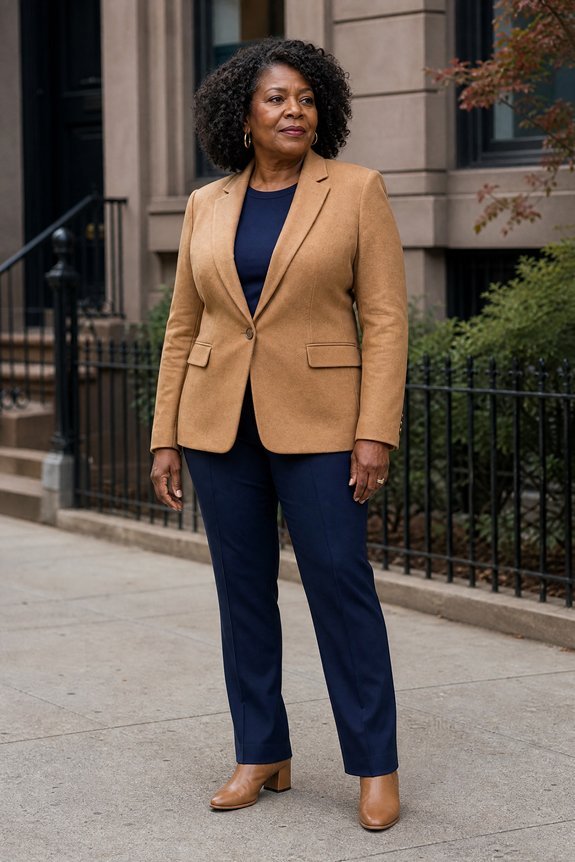
Body-shape labels can help you identify where an outfit carries visual weight, but they should not decide your wardrobe. Use them to choose which lengths to compare:
- More fullness through the hips: Compare a waist-length jacket with one that finishes below the fullest part of the hips. Both avoid placing the strongest line directly across that area.
- More fullness through the middle: Try an open high-hip or below-hip jacket with a clean front edge. Check that it skims without catching or swinging forward.
- A defined waist: Waist-length, shaped, or belted jackets can repeat that definition, while straight longline styles create a different, less fitted effect.
- A straighter frame: Cropped jackets can introduce a visible waist break, while longline jackets create a clean column. Choose according to the effect you want.
For more examples of using garment lines without trying to conceal your body, see this guide to a fall capsule wardrobe for apple-shaped women over 50.
Measure a Jacket You Already Love
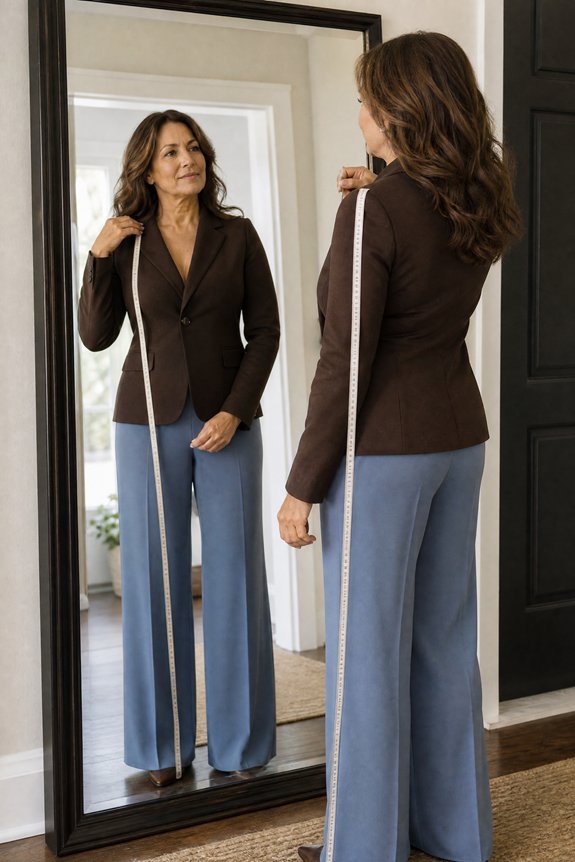
The quickest way to find a useful length is to measure a jacket that already works. Lay it flat with the collar arranged naturally. Measure from the center back at the base of the collar straight down to the hem. Record that number as the jacket’s center-back length.
Next, put the jacket on and note exactly where the hem reaches on your body: waist, high hip, fullest hip, below the seat, or mid-thigh. The same inch measurement will not land identically on every person, so both pieces of information are useful.
When shopping online, compare your measurement with the product’s garment length—not a generic chart from another brand. Check whether the retailer measures from the shoulder or center back, because the two methods produce different numbers. If no garment length is listed, customer service may be able to provide it.
Check the Whole Jacket Before Blaming the Length
A poor fit elsewhere can make the hem look wrong. Before rejecting the length, check these areas:
- Shoulders: On a traditionally tailored jacket, the shoulder seam should sit near your natural shoulder edge. Deliberately oversized and dropped-shoulder styles are exceptions.
- Bust and closure: The front should close without strong pulling, gaping, or distorted lapels.
- Hips: A longer jacket needs enough room to fall cleanly rather than catching and riding upward.
- Sleeves: Sleeve length depends on the style, but everyday jacket sleeves commonly finish around the wrist. Check whether cuffs interfere with your hands.
- Movement: Reach forward, sit down, and bend your arms while wearing the layers you expect to put underneath.
If the jacket pulls upward because it is tight through the bust or hips, changing the length alone will not correct the silhouette.
How to Style Cropped, Hip-Length, and Longline Jackets
Cropped jackets: Pairing one with high-rise trousers or a skirt makes the waistband and lower-body line visible. This combination works particularly well with wide-leg jeans because the short outer layer does not compete with the trouser volume. See these wide-leg-jeans styling ideas for women over 50 for practical examples.
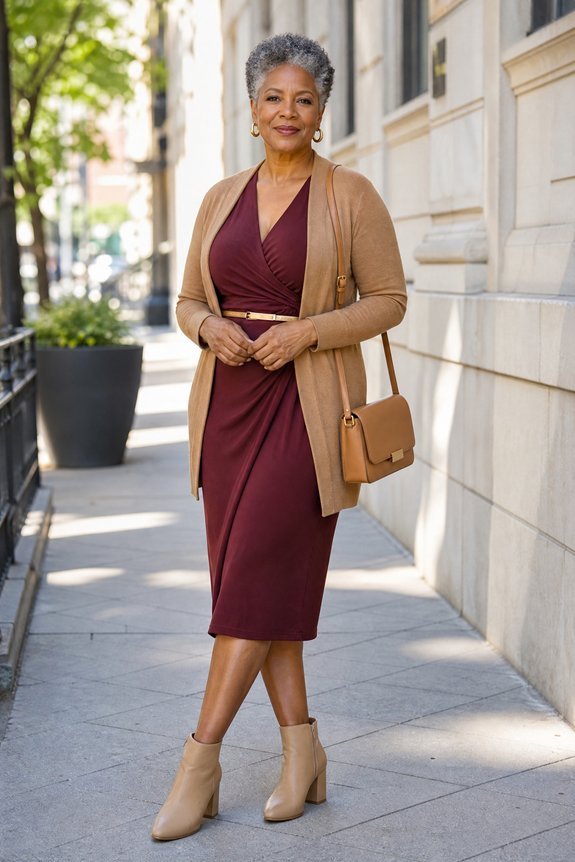
Hip-length jackets: These are flexible enough for jeans, work trousers, and many dresses. If a boxy version feels heavy, try wearing it open, pushing up the sleeves, or showing the waistband beneath it.
Longline jackets: Keep the layer underneath relatively smooth so the jacket can hang cleanly. The trousers do not have to be skinny; straight and wide-leg cuts can both work when the hems, waist placement, and fabric weights feel intentional together.
A Simple Three-Length Mirror Test
Instead of calculating a perfect ratio, compare three clear options with the same base outfit: one at the waist or high hip, one at the full hip, and one below the hip or at mid-thigh. Take front and side photographs from the same camera position.
Ask three questions:
- Does the jacket create the amount of waist definition or coverage I want?
- Does the hem work with the rise and width of my trousers, skirt, or dress?
- Can I sit, reach, and layer comfortably without the jacket pulling out of position?
You may prefer different answers for work, weekends, travel, and winter weather. That is normal; you are finding the best length for a particular outfit and purpose, not one permanent measurement for every jacket.
Conclusion
The most flattering jacket length is the one that creates the balance, coverage, and movement you want. Cropped jackets expose more of the lower-body line, hip-length jackets are versatile, and longline jackets create an extended outer column. None is automatically right or wrong for your height, age, or body shape.
Start with the jacket’s purpose, compare where several hems land, and measure a jacket that already fits well. Then check the shoulders, bust, hips, sleeves, and movement before making your decision. A useful real-world comparison will tell you far more than a universal inch measurement or styling formula.