Which Sweater Fabrics Are Warmest Without Feeling Itchy or Heavy?
You’ve pulled on a sweater that looked cozy, only to spend the day scratching like you’re wearing a burlap sack. We’ve all been there. The good news is that fabric choice, fiber diameter, and knit structure all determine whether a sweater actually feels warm and comfortable. Some fibers trap heat brilliantly without adding weight or irritation, and knowing which ones do that changes everything about how you shop.
Key Takeaways
- Alpaca fiber ranks highest for warmth-to-weight ratio, with hollow fibers trapping heat efficiently while remaining lightweight, gentle, and lanolin-free.
- Cashmere offers exceptional softness and low thermal conductivity, making it warm without heaviness when knitted in tighter, loftier structures.
- Merino wool under 18 microns rarely causes prickling, making it ideal for sensitive skin needing warmth without irritation.
- Fiber diameter above 25–30 microns physically pokes skin, so choosing finer fibers directly prevents itchiness rather than requiring synthetic blends.
- Tighter, loftier knit structures trap more insulating air, boosting warmth while reducing the scratchiness associated with loose, coarser constructions.
Why Some Sweaters Feel Itchy and Others Don’t
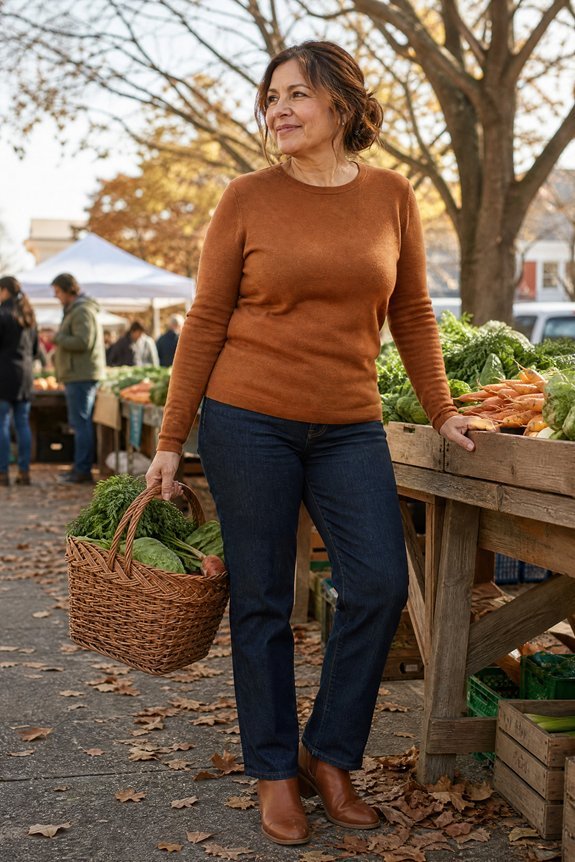
When a sweater makes you want to tear it off within minutes of putting it on, the culprit is almost always fiber diameter. Coarse fibers exceeding roughly 25–30 microns physically poke your skin, triggering that maddening prickle. It’s mechanical irritation, not a fiber allergy — though true sensitivities do exist.
We often blame “wool” entirely, when the real villain is just thick, scratchy fiber. Synthetic blends sometimes solve the itch problem but sacrifice breathability. Fabric construction matters too — loose, open knits scratch more than dense ones. This is why relaxed-luxury dressing favors cashmere alternatives like bamboo blends, which deliver softness against the skin without the coarse fiber diameter responsible for irritation. Understanding the actual cause helps us choose smarter.
How Knit Structure Makes a Sweater Warmer or Itchier
Fiber diameter gets most of the blame for itchy sweaters, and it deserves it — but it’s not the whole story. Knit structure quietly shapes both warmth and comfort in ways we often overlook.
- Loop size controls how much air gets trapped between stitches
- Stitch porosity affects breathability and that dreaded scratchy airflow against skin
- Ribbed density pulls fabric closer to your body, improving thermal layering without added bulk
- Loop size variations create micro-pockets that boost insulation
Tighter, loftier knits warm us better. Looser, coarser ones scratch more — regardless of the fiber itself. Heavier knit structures also tend to hold their shape and resist pilling over time, making them a smarter long-term investment than thin, loosely woven alternatives.
The Warmest Sweater Fabrics Ranked by Warmth-to-Weight
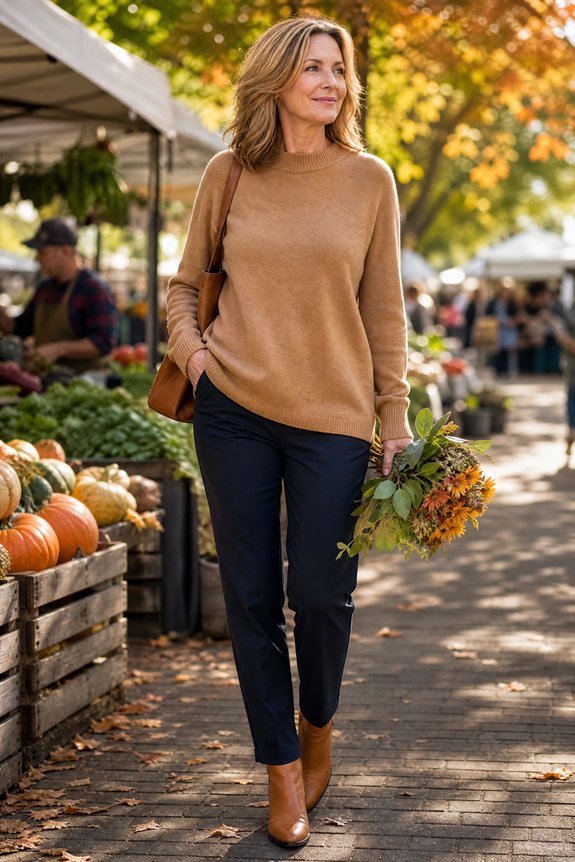
Not all warm sweaters are created equal, and once we start looking at warmth-to-weight ratios, the ranking gets pretty revealing. Alpaca wins big here, thanks to fiber hollowing that boosts air entrapment without adding bulk. Cashmere follows closely, with low thermal conductivity and an almost unfair softness advantage. Merino earns solid marks too, especially when yarn twist is dialed in to maximize loft.
What drops a fabric’s ranking fast? Dense, tightly spun yarn that crushes air pockets flat. We want warmth without lugging around extra weight, and these three fibers consistently deliver that balance better than most.
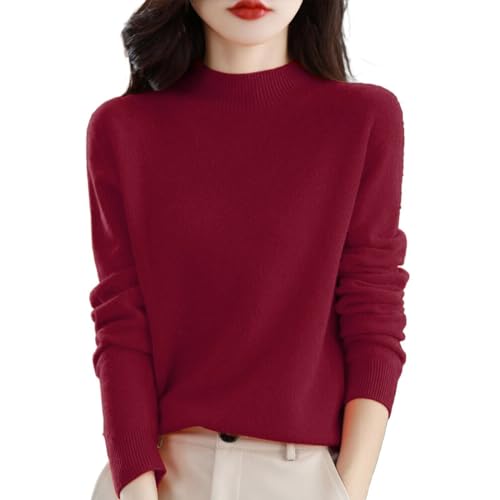
CASHMERE: This women’s knit top mixes fine cashmere and soft merino wool fibers for gentle skin contact without scratchiness; the tightly woven knit locks in body heat to deliver steady warmth for fall and winter daily wear

CASHMERE: This women’s knit top mixes fine cashmere and soft merino wool fibers for gentle skin contact without scratchiness; the tightly woven knit locks in body heat to deliver steady warmth for fall and winter daily wear

CASHMERE: This women’s knit top mixes fine cashmere and soft merino wool fibers for gentle skin contact without scratchiness; the tightly woven knit locks in body heat to deliver steady warmth for fall and winter daily wear
Is Merino Wool Soft Enough for Sensitive Skin?
Sensitive skin has a way of turning sweater shopping into a minor ordeal, but merino wool is one of the few animal fibers that actually earns its “soft” label. Fibers under 18 microns rarely trigger prickle, which is why we recommend it first. Much like how understated accessories can elevate a simple look without overwhelming it, a finely knit merino sweater offers warmth and polish without irritating sensitive skin.
Still, individual reactions vary, so consider these precautions:
- Try skin testing before committing to a full purchase
- Watch for fiber allergy symptoms like redness or persistent itching
- Use comfort layering with a thin base if sensitivity lingers
- Explore synthetic blends for extra softness without sacrificing warmth
Merino’s rarely the villain here.
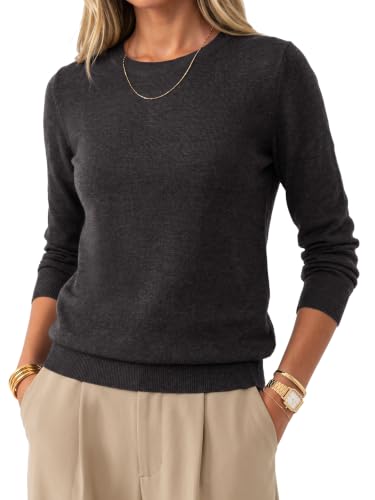
Size & Fit: S=US 4–6, M=US 8–10, L=US 12–14, XL=US 16–18, XXL=US 20–22. Regular fit sweater drapes beautifully and complements different body types. Please refer to the size chart before ordering for your best fit

Premium Fabric Selection: Made of soft and stretch knit material, breathable and skin-friendly, this lightweight cardigans for women brings all-day comfort without bulk, ribbed cuffs and hem lock warmth well, suitable for cool spring, autumn and early winter daily wear, easy to maintain and not easy to deform after repeated washing.

Luxury Material: 100% Australian Merino Wool - Merino fibers are finer and smoother than regular wool.This sweater vest is made of 2/48NM Superfine Pure Merino Wool yarn, with a fineness of 19.5 microns.Experience the luxury of 100% Superfine Merino Wool, a base layer so gentle you'll forget it's there.Softness makes it wearable directly on skin, unlike coarse wool which can be scratchy.
Why Cashmere Sweaters Feel Light but Stay Remarkably Warm
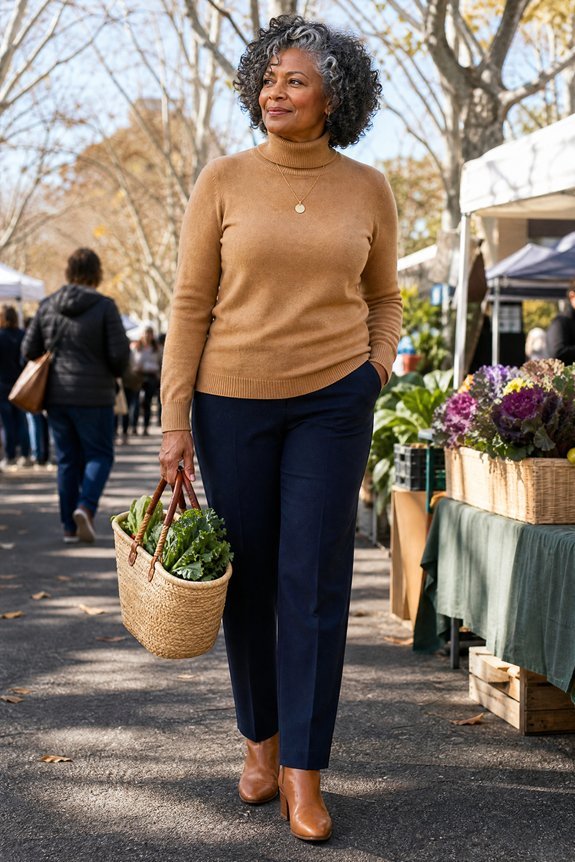
Cashmere pulls off a neat trick: it keeps you genuinely warm without weighing your shoulders down or making you look like you’re bundled for a blizzard. The secret sits inside the fiber itself. Cashmere has remarkable fiber porosity, meaning its structure holds tiny air pockets that build serious thermal loft. Some fibers are hollow, trapping warmth the way a good sleeping bag does, just without the bulk. We get insulation without the extra grams. This is why a longline cashmere cardigan can layer over a fitted shell and still keep proportion sleek rather than bulky.
The result? A sweater that feels almost suspiciously thin yet performs well into genuinely cold weather. Lightweight warmth isn’t magic — it’s just smart fiber structure.

[Luxurious Cashmere Blend Sweater for Women]:This women’s pullover knit sweater is woven from premium cashmere mixed fabric. The material feels incredibly soft and fluffy against your skin with zero stiff texture. Great moisture-wicking performance and anti-static property, delivering cozy warmth while maintaining a sleek, elegant look.

Soft Gentle Knit Fabric: This cashmere sweaters for women uses skin friendly lightweight knit material with smooth touch that stays comfortable through long hours of daily wear
Premium Fabric Selection: Made of soft and stretch knit material, breathable and skin-friendly, this lightweight cardigans for women brings all-day comfort without bulk, ribbed cuffs and hem lock warmth well, suitable for cool spring, autumn and early winter daily wear, easy to maintain and not easy to deform after repeated washing.
Alpaca Sweaters: Warmer Than Wool and Gentler on Skin
Alpaca pulls off something wool often can’t: genuine warmth without the prickle. Its fiber hollowing creates natural thermal loft, trapping heat efficiently while keeping weight surprisingly low. We also appreciate that alpaca skips lanolin entirely, which genuinely improves allergen profiles for sensitive skin. Styling durability holds up well too—alpaca knits resist sagging and pilling better than you’d expect. Here’s what makes it work:
- Hollow fibers trap air like built-in insulation
- Smooth, low-angle scales reduce surface friction
- No lanolin means fewer irritation triggers
- Dense knits maintain shape across seasons
It’s warm, comfortable, and quietly impressive.
Cashmere vs. Merino vs. Alpaca: Which Sweater Fabric Fits You?
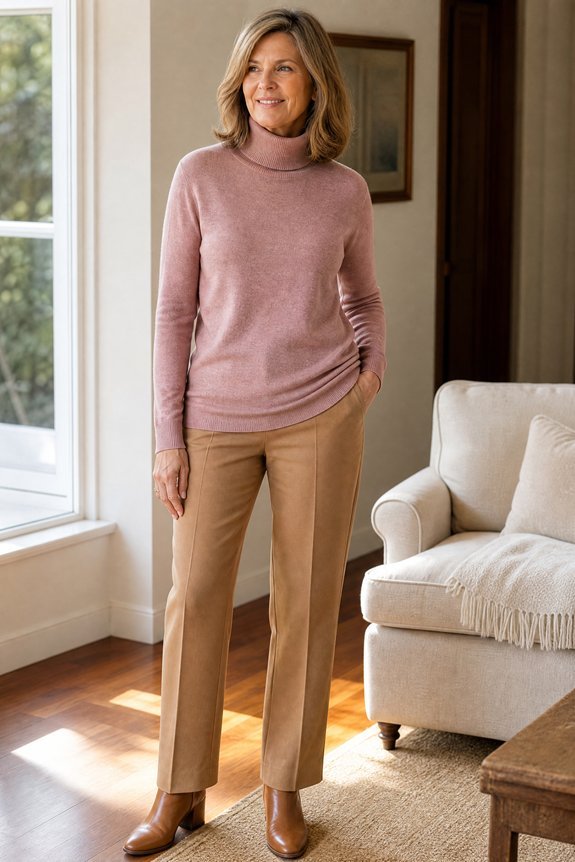
Picking between these three really comes down to what you need most—warmth, softness, budget, or some mix of all three.
Cashmere wins on softness and warmth-to-weight, but price positioning puts it out of reach for many of us.
Merino balances performance and affordability well, especially in ethical production lines with transparent fiber sourcing.
Alpaca edges ahead on raw warmth and skips lanolin entirely, which matters if wool irritates your skin.
Blend performance can also stretch your budget—cashmere-merino or alpaca-merino blends often deliver nearly premium results at lower cost.
Pick what fits your priorities, not just the label.

Material: This womens cashmere sweater is made of comfortable fabric that is soft, lightweight, warm. Soft materials will make you feel more comfortable and relaxed.

Size Selection: This cashmere sweater undergoes a precision pre-shrinking process. The initial relaxed drape is intentionally designed to accommodate the natural shape of the fibers, ensuring a perfect fit after gentle machine washing. Please refer to our size guide and confidently choose your usual size

Size Selection: This cashmere sweater undergoes a precision pre-shrinking process. The initial relaxed drape is intentionally designed to accommodate the natural shape of the fibers, ensuring a perfect fit after gentle machine washing. Please refer to our size guide and confidently choose your usual size
How to Wash Merino, Cashmere, and Alpaca Without Ruining Them
Fine fibers like merino, cashmere, and alpaca almost always survive for years—until someone tosses them in a hot wash. We’ve all made that mistake once.
Here’s how we avoid repeating it:
- Use cool water and a mild detergent, never hot cycles
- Gently squeeze out water; don’t wring or twist
- Handle stain removal immediately with cold water and gentle dabbing
- Always finish with air drying flat, never hanging
Hanging stretches the shape, heat causes felting, and agitation destroys loft. Treat these fabrics carefully, and they’ll stay soft, warm, and genuinely worth every dollar spent.
Conclusion
We’ve covered a lot of ground, but here’s the takeaway: if you want warmth without bulk or itch, alpaca, cashmere, and fine merino under 18 microns are your best options. Why settle for a sweater that makes you squirm all day? Choose ribbed or lofty knits, check fiber micron counts when you can, and test against bare skin before committing. The right sweater should feel like a second skin, not sandpaper.
References
- https://alpaca.asn.au/wp-content/uploads/2019/09/properties-processing-and-performance-of-rare-and-natural-fibres-a-review-and-interpretation-of-existing-research-results.pdf
- https://armsofandes.com/blogs/news/alpaca-better-than-merino-cashmere
- https://scienceinsights.org/warmest-sweater-material-fibers-ranked-by-heat/